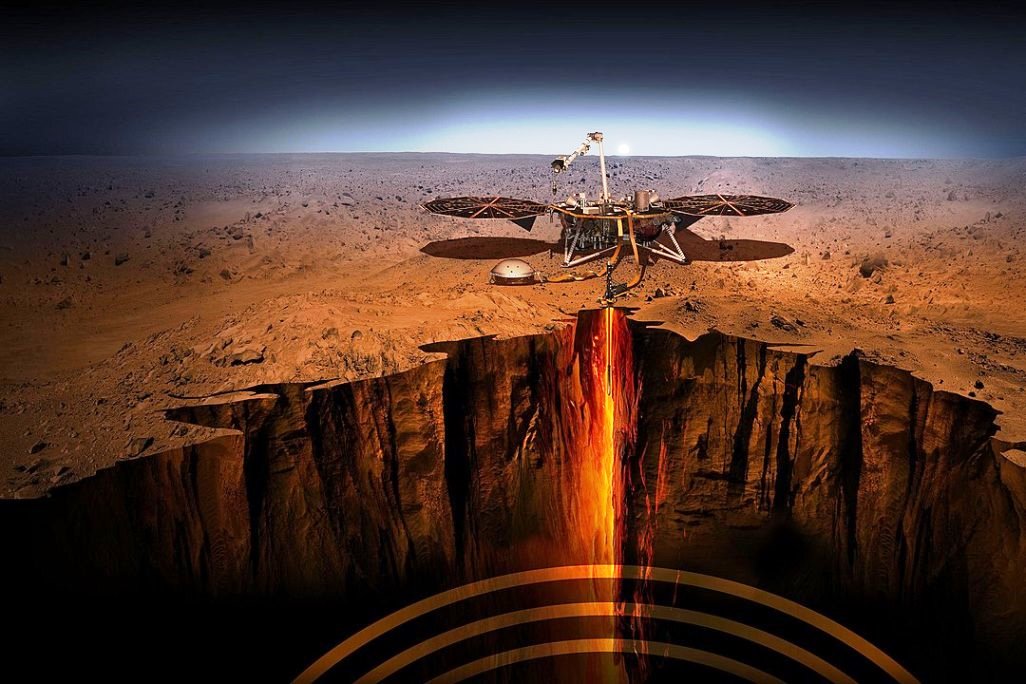
We were excited to hear Insight robotic lander settled gently on the ‘Red Planet’ on November 26, 2018 on cue. Its objective is to place a seismometer (SEIS) to measure ground motions following earthquakes and volcanic eruptions. Its secondary purpose is to burrow a heat probe (HP3) into the surface to study the planet’s geological evolution. None of this would be possible without the Insight power supply system.
The Batteries at the Heart of the Insight Power Supply
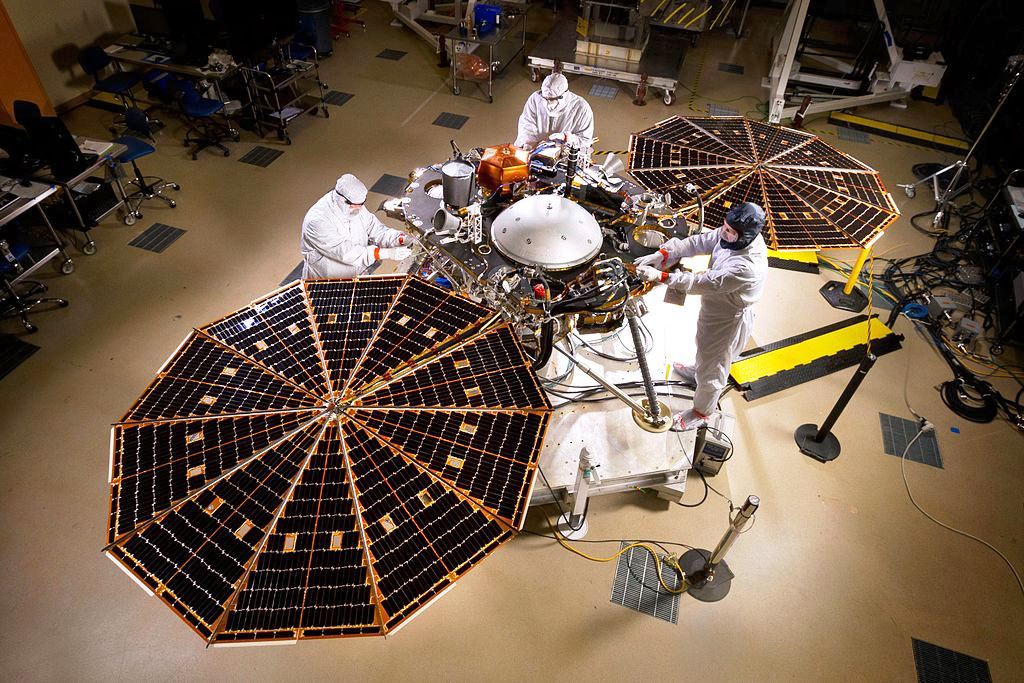
The Mars lander has two, 23 amp-hour lithium batteries to power the space vehicle at night. We imagine one is a back-up for the other because there is no fallback position for that.
The SEIS seismometer will consume an average 5 watts. This will peak at 8.5 watts depending on the operating mode. It will reduce demand considerably in winter when the amount of daily sunlight falls. However, it will crank back to maximum if it detects seismic activity and wants to maximize the number and quality of measurements. It will then stream the data continuously back to Earth.
Keeping the Batteries Charged Will Be First Priority
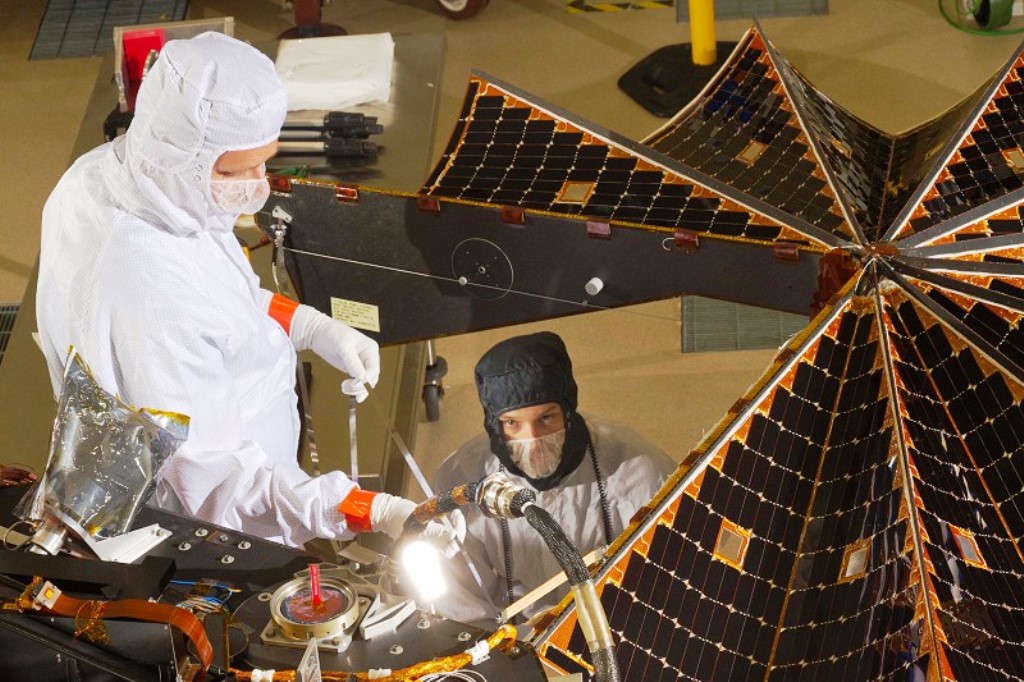
However, none of this will be possible without a solar array feeding energy to the Insight power supply batteries. The instruments require more power than those on the Phoenix lander
Therefore, NASA engineers thoughtfully added seven auxiliary solar arrays. They cover a total surface area of 0.8 m² enabled by a more compact design. The SEIS-Insight website of the European Union provides fascinating insights into the benefits of this arrangement. In the first instance, it will ensure the Insight power supply batteries last through long, dark Martian nights. In the second, this should also make it robust enough to survive dust storms after entering hibernation mode.
Mars is the second smallest of the terrestrial planets comprised mainly of silicate rocks and metals. We suspect it may yet produce some of the biggest surprises geophysics ever found.
Related
Mars’ Natural Batteries Deepest Secret
Mars Helicopter Scout Reveals All to See
Preview Image: Concept Insight Lander