Sub-atomic electrons are the power behind electricity. This form of energy materializes when electrons move between atoms. But batteries do not create electrons or electricity. However, they do store electrons from external sources, and release them on demand. That’s why we imagine them as battery power houses, not power stations in this article.
Storing Electricity in Batteries to Power Grids
Hydro power stations were the only way to store electricity before grid scale batteries arrived. Prior to this, renewable energy was little use to power utilities that fed electricity to our homes and businesses. But now we have giant sets of battery cells to bridge the gap.
Most of those batteries use lithium as their active metal. That’s the silvery element that was so excitingly volatile in chemistry class. The blog Ed Conway Stack comments that’s also why it took so long to develop working lithium-ion batteries. And how we still tolerate a compromise because they are so powerful.
So What’s Inside These Battery Power Houses?
When a priest showed off the first Baghdad Battery, the people might have imagined there was a spirit inside, if indeed the clay jars ever stored electrons. If we were around at that time, we might have mentioned it was chemical potential and run a mile.
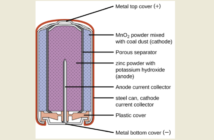
But that’s in fact exactly how modern battery cells work. They have components with chemical potential, plus a neat design that transforms this energy to electrons that just need an external circuit to get moving. The most important two parts of a battery are the anode and cathode that exchange those electrons.
The active metal’s charged ionic particles accumulate at the anode when we charge a battery. That’s the battery storage role we referred to earlier. When we use the battery, they flow the other way as the electrons power house an external circuit.
Scientists assumed this was happening for centuries, because they could not see the subatomic particles. Now they are beginning to glimpse them with powerful electron microscopes. But a little of the magic still remains, just like those Baghdad Batteries. If indeed there really were battery power houses that simple.
More Information
Baghdad Battery Cells Lost in Time
Battery Fundamentals and Flow of Electrons