We use the word ‘electron’ casually when we say chemical energy in a battery sends electrons through a circuit. And that they energize a device by delivering electricity. Perhaps we never explained exactly what electrons were before, because they are so very, very tiny. Well if that’s the case, then it is time we update you with a very simple guide to electrons.
What are Electrons? A Very Simple Guide
Atoms are the very tiny building blocks of the universe. They are so microscopic you could put countless numbers on the head of a pin. Yet even they comprise several sub-atomic particles. These are one or more positive protons, a cloud of negative electrons, and a number of neutral neutrons.
The negatively charged electrons are the smallest of the atomic sub-particles. They form in tiny clouds surrounding the atomic nucleus, where they organize themselves into a number of groups, or ‘shells’. However, they move so quickly it is impossible to see where they are.

- The above diagram shows the probability pattern for a single electron
- The shapes of the ‘shells’ depend on the quantity of electrons in them
- A higher atomic number indicates a greater number of electrons and ‘shells’
Tiny Electrons in Our Giant World of Electricity
We close our very simple guide to electrons with a quick reference to their role in electricity and batteries. First of all, they play a vital role in a process we call ‘electrovalent bonding’, whereby an electron moves from one atom to another.
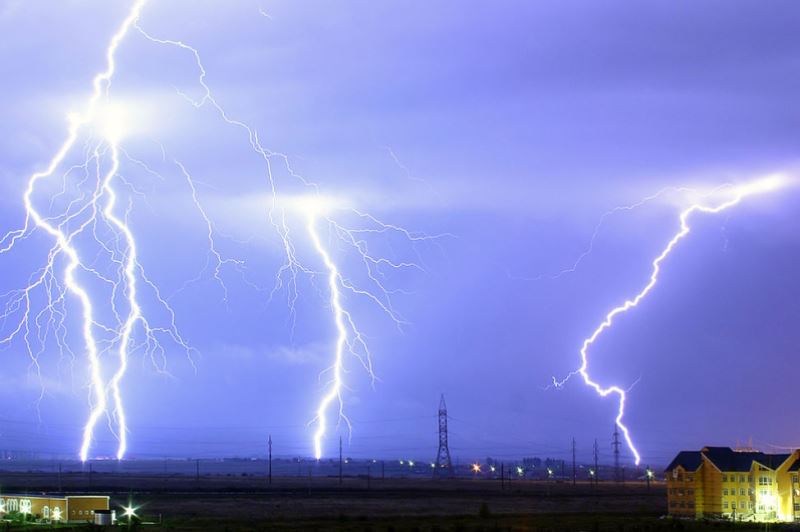
Their ability to move between atoms in negative anodes and positive cathodes, and return is a fundamental building block of electrochemistry. When electrons do so through electric wires our devices can operate. But that is only small fry, when we compare this to traveling from the clouds on high to the earth far below.
More Information
Build a Mini Tesla Coil for School