National German movement REWIND announced a plan for a new era of battery recycling. One of the key components of its plan involves more efficient battery recyclates. These are the components and raw materials that leave recycling plants, and take their place in new products. This project is part of the BattFutur program of the German Federal Ministry of Education and Research.
Without Lithium-Ion Batteries, Where Would We Be …
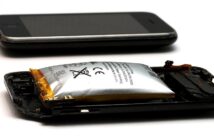
Lithium-ion batteries are the best we have at the present moment, although we could hardly call them the fireman’s friend with so many battery fires. Their materials are not abundant either, and mining them permanently damages our environment.
The short-term solution is to reuse their materials when the batteries are spent. This is where the REWIND project comes to the party with these dynamic objectives:
- Develop a lithium-ion solution whose design enhances its recyclability.
- Ensure that this allows efficient removal of battery recyclates intact.
- Foster a generation of young battery scientists able to sustain research.
- Transfer REWIND achievements across to sodium-ion technology.
More About Battery Recyclates And Other Project Goals
The overall REWIND objective is ‘to significantly improve the recyclability of batteries in order to increase resource efficiency, and reduce CO2 emissions’. The core mission is to set new standards for battery recycling, with a circular approach.
This closed-loop will ensure that almost all lithium-ion battery components are recoverable in a manner that preserves them intact. This method will be more environmentally responsible than shredding them en-masse, and separating their materials with harmful chemicals.
In summary then, the REWIND project comprises three overlapping aspects as follows:
- Design materials and components that facilitate dismantling parts without affecting their functionality.
- Develop a set of markers in battery cells that make it easy to identify materials and components.
- Design a cell that can be opened almost without contact, so the anode and cathode can be easily removed.
This appears to be a great opportunity to tackle battery recycling in a coordinated fashion, and simplify a process with many flaws. We wish the REWIND team every success with their initiative.
More Information
Quick Release Battery Binder Recycles Faster
Making Electric Car Batteries Easier to Recycle