

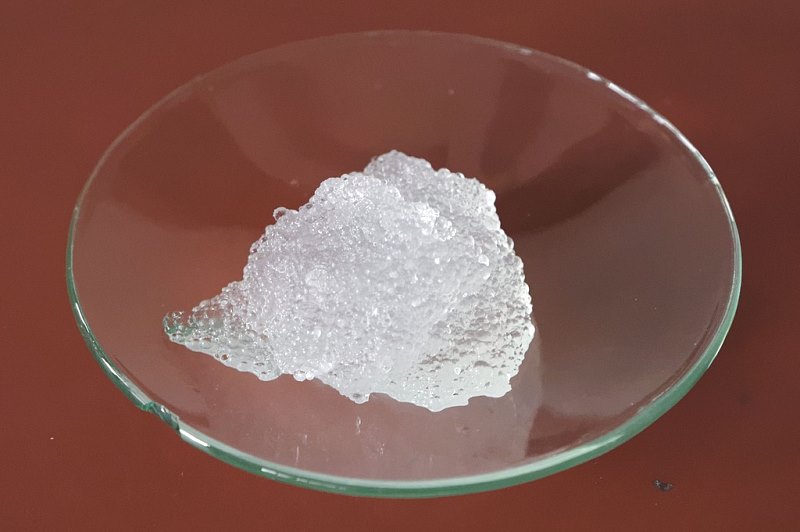
Aqueous sodium-ion batteries, with water-based saline electrolytes have a number of issues researchers are still trying to resolve. Among these are poor cycling stability, lower voltage window, and corrosion. High salt-concentration is behind these problems, and this in turn is due to systemic salt precipitation according to Springer. Global Newswire announced a remarkable step forward on October 17, 2023. Hydrogels stop sodium-ion battery corrosion under laboratory conditions.
What Are Hydrogels and How Did We Discover This?
Hydrogels are porous, permeable solids with a 10% content of fluid, mainly water. We find them in hair gels, toothpastes, and cosmetics. Their ability to absorb water up to 99% of their volume makes them ideal for soft wound dressings, and yes, for contact lenses too. News on the wire is that hydrogels stop sodium-ion battery deterioration too.
The Global Newswire Report (see link below) hints at something very important when it uses terms like ‘ground breaking, remarkable, and revolutionize’. We wondered whether this was another laboratory ‘flash in the pan’, or whether it has potential in the real world. We followed our noses to AZO Materials and discovered this is indeed the case.
How Did Hydrogels Stop Sodium-Ion Battery Precipitation?
The AZA Materials report (see link below) reveals that Chinese researchers enhanced the stability of hydrogels in sodium-ion batteries. These gels are in common use in flexible aqueous batteries for portable electronic devices.
The researchers enhanced a hydrogel’s ability to absorb liquid by ‘methylating their structural polymer’. This breakthrough eliminated the systemic salt precipitation that previously led to poor cycling stability, lower voltage window, and corrosion.
The increased salt concentration that resulted from this, expanded the electro-chemically usable voltage range of the cell. It also increased cell capacity, and prevented electrode deterioration resulting in improved cycling stability.
Global Newswire comments, “This breakthrough has far-reaching implications for the future of battery technology, especially in the context of the global push for cost-effective, and eco-friendly alternatives to lithium-ion batteries.”
More Information
Sodium-Ion Battery Game Changer
Sodium-Ion Future And What It Might Be
Preview Image: A Super Absorber Hydrogel


