Battery separators are located between cathodes and anodes to prevent those active components touching, while allowing ions to pass through during charging and recharging cycles. Scientists at University of Bristol have succeeded in making a battery separator from renewable seaweed nanoparticles. Their paper appeared in Science Daily (see link below) on October 5, 2022.
Strong Battery Separator from Seaweed Nanoparticles
Nanoparticles are very small pieces of something we cannot see with our naked eye. They have potential to display different chemical and physical properties than larger pieces we can see. The scientists at Bristol University used this knowledge to fabricate a greener, stronger battery separator from seaweed.
However, in this instance they decided to use a sodium-metal platform for their experiment. And that was because this technology holds great promise as a high-energy, low-cost energy storage solution. Except, that is for the fact dendrites penetrate commercial-grade separators, and short-circuit the electrodes.
The team had previously worked on a related battery project. However, this time they chose to team with colleagues from Imperial College, and University College London. This combination worked well, and they came up with a novel battery separator from seaweed nanoparticles of cellulose.
And What Is More, This Prevented Dendrites Penetrating
“We have shown seaweed-based materials can make the separator very strong,” explains PhD student from Bristol Composites Institute Jing Wang. “And therefore prevent puncturing by metal structures made from sodium.
“Our method also allows for greater storage capacity and efficiency, increasing the lifetime of the batteries. This is something which is key to powering devices such as mobile phones for much longer.” Dr Amaka Onyianta from the Institute who created the cellulose nanomaterials, and was also co-author was delighted.
“This means we wouldn’t have to rely on scarce materials such as lithium in future, which companies often mine unethically,” he explains. And moreover they use a great deal of natural resources, including water to extract it.”
“Greener forms of energy storage are possible, without being destructive to the environment in their production,” his colleague added. This achievement therefore holds promise for better storage batteries in future.
Breaking News
Hydrogen Versus Batteries For Storing Power
LiFePO4 Batteries Are Set to Take a Lead
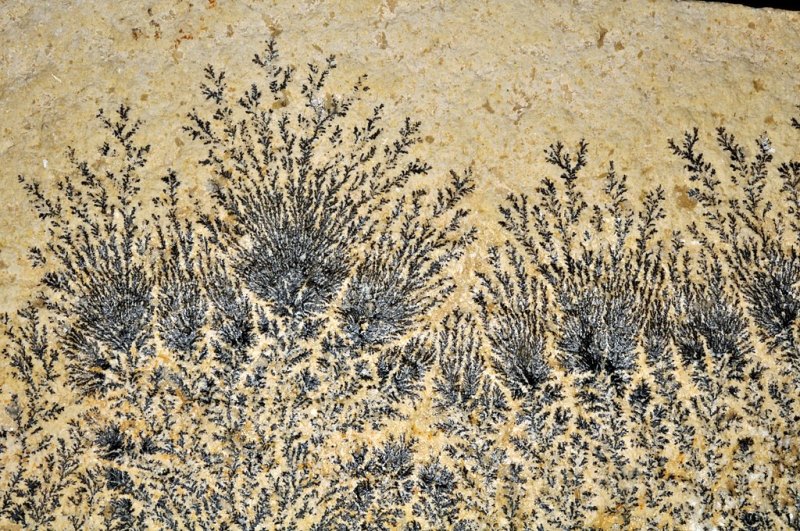
Preview Image: Manganese Dendrites in Limestone