


Carbon pricing levies a tax on companies exceeding their emission goals. However, if they can link up with other enterprises that are within their limits they can offset each other. Money changes hands to complete the sale of these carbon offsets. Hence carbon tax is not an absolute solution. It is a step along the road in a world where money purchases almost anything.
However Some Say Carbon Pricing is Not a Solution

Scientific American contributor Scott Tinker does not agree with this approach. He wrote a thoughtful piece for their blog on August 16, 2019. In it, he says the carbon pricing model will not work because developing nations cannot afford the cost.
Scott is Allday-Endowed Chair of Subsurface Geology. He is also director of the Bureau of Economic Geology at the University of Texas at Austin. In our developed world we have the money to fix the climate problem he says. However, poorer nations cannot afford to upgrade their technology, let alone pay the carbon tax. Therefore, carbon pricing is not a practical approach in their case.
So Instead, the Third World Just Keeps on Polluting
Scott Tinker explains how carbon pricing increases the cost of products in the developed world. This drives manufacturing to the third world, where labor rates are lower and governments less sensitive to global warming. He says carbon pricing is therefore not the answer because it simply moves the pollution plume.
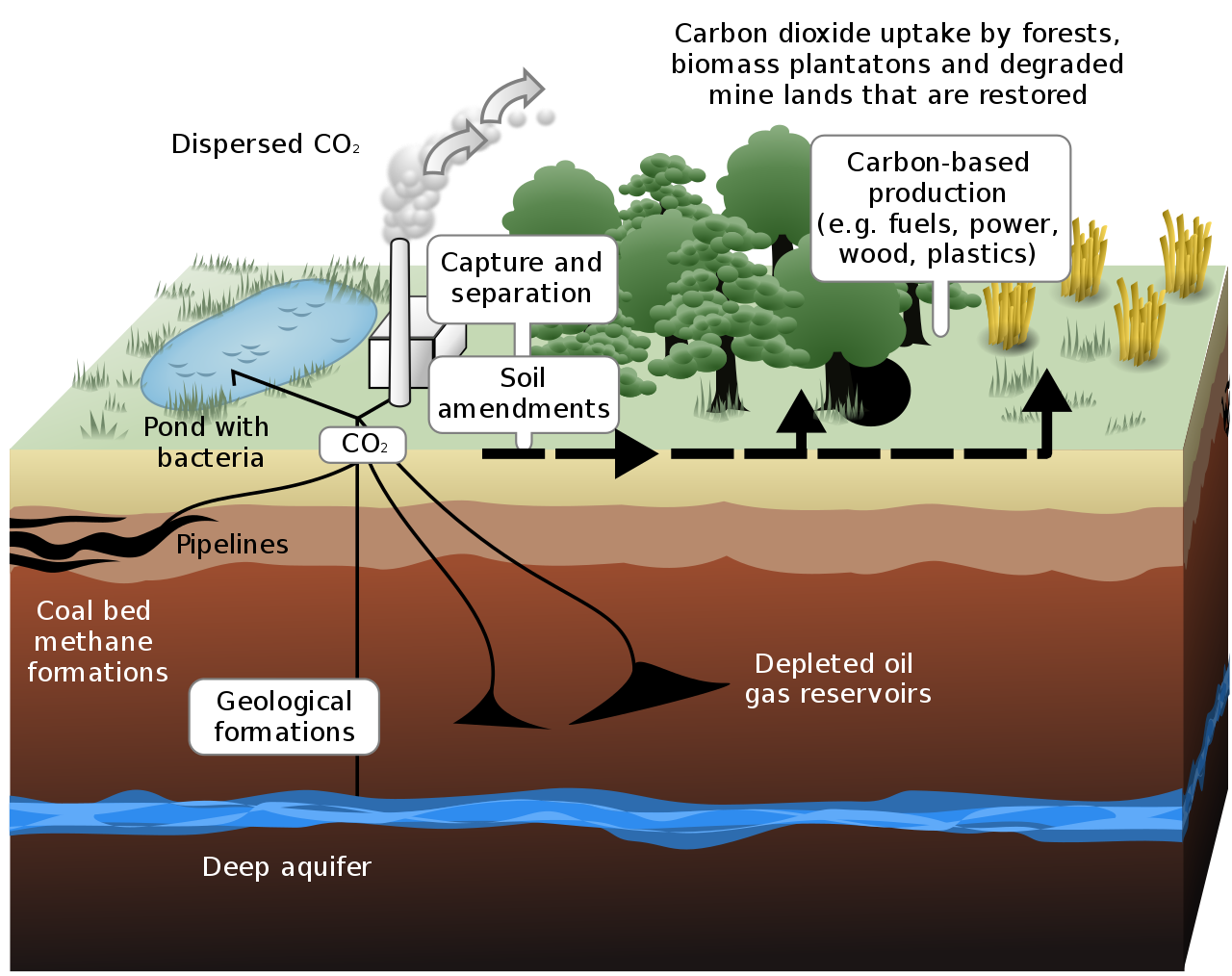
Scott claims renewable energy will take too long to roll out in these countries to have a marked effect within our immediate needs. Instead, he suggests a series of ‘quick fixes’ including natural gas, nuclear power generation, and carbon capture including vast new forests in heavily polluted areas.
Carbon pricing is not viable he says, because it is too expensive and it takes too long. Therefore we must think again, he argues. Do you think he makes his point?
Related
U.S. Carbon Capture Review and Update
Boreal Forest Home To Toxic Emissions
Preview Image: A coal-fired power plant in Luchegorsk, Russia




1 Comment
The basic premises of Mr. Tinker’s blog don’t stand up to simple fact checks. The notion that carbon pricing won’t be adopted by developing economies is belied by the existence of such programs in Argentina, Chile, China, Colombia, Mexico, South Africa, and Ukraine. The World Bank reports that 46 nations either have some form of carbon pricing or are considering it.
The notion that carbon pricing in the developed world will drive jobs and industry abroad is belied by border cost adjustments contained in many of the carbon tax bills recently introduced in Congress, including the Energy Innovation and Carbon Dividend Act (HR 763), endorsed by 59 members. These provisions will prevent foreign countries from gaining a competitive advantage in the U.S. market by underpricing carbon emissions.
The claim that “carbon pricing won’t work” is belied by studies of successful emissions reductions in Sweden, UK, British Columbia, and other countries and sub-national regions. Since Sweden introduced a carbon tax in 1991, its GDP has grown more than 60 percent, while CO2 emissions have been slashed by about 25 percent.
It would take too long to refute the author’s poorly informed claims about renewable energy and vehicle electrification; readers can consult a vast literature on these subjects, including the highly respected Lazard comparison of levelized cost of energy, comparing wind, solar, nuclear, and fossil fuels. Suffice it to say that nuclear power and carbon capture are neither quick nor cheap fixes to anything.
Finally, anyone interested in expert opinion on the most cost-effective means of curbing carbon emissions should also consult the Economists’ Statement on Carbon Dividends, originally published in the Wall Street Journal on January 17, 2019. It has been endorsed by 3,554 U.S. economists, including 27 Nobel Laureates, four former Chairs of the Federal Reserve, and 17 former Chairs of the President’s Council of Economic Advisors.