The last few years have been quite a roller coaster ride for battery storage. We have seen it win the right to bid on level ground with fossil. And then prove less expensive in some places too. Phys Org thinks cheaper grid scale batteries have reached a point where they will soon start saving consumers money.
Exciting Things Are Happening for Cheaper Grid Scale Power
Phys Org detects signs utilities have decided it is too expensive to build big power plants to meet peak demand. The US Energy Information Administration (EIA) says peaking plants will provide all new grid scale capacity in 2019.
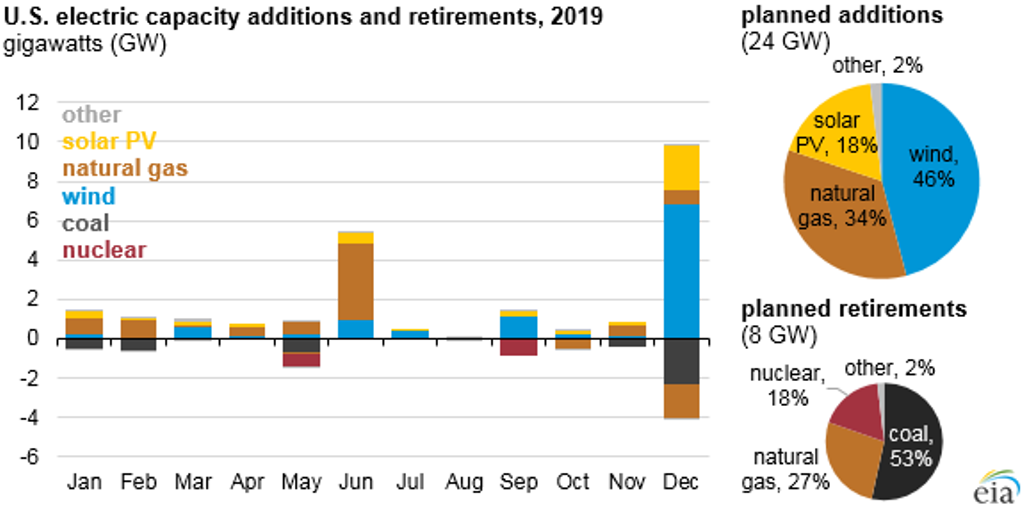
This relatively cheaper grid scale energy will come from natural gas, wind and solar while other coal, gas, and nuclear plants will close. Batteries have truly become the new ‘spinning reserve’ of the US energy industry. That’s because they are the only known way to provide an instant surge of grid scale power. Renewables have contributed approximately half new US generation capacity since 2014.
US Energy Information Administration Releases Exciting Data
An EIA report released January 10, 2019 predicts 23.7 gigawatts of new capacity additions will enter service in 2019. However, 8.3 GW of capacity will retire. The new energy will mainly come from wind (36%), natural gas (34%), and solar (18%).
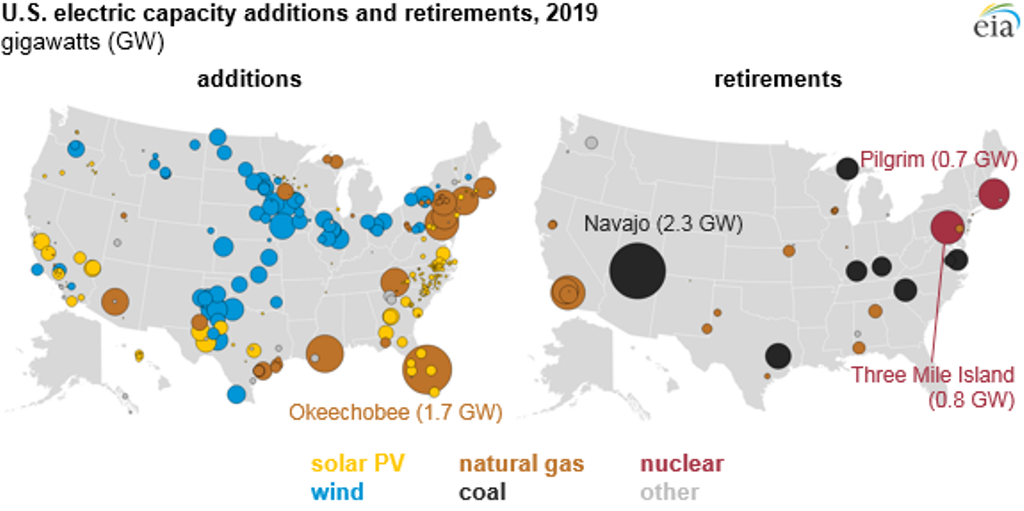
The retiring plants will be mainly coal (53%), natural gas (27%) and nuclear (18%). These numbers demonstrate the inroads cheaper grid scale energy is making into the US energy market. Two trends appear to be steadily dislodging large coal and nuclear power stations.
These trends are first, a major decline in natural gas prices due to fracking. And secondly, cheaper grid scale batteries empowering wind and solar to come of age. Phys.Org predicts energy storage will be cheaper than natural gas by 2030.
Related
Snowy Hydro Adds Wind and Solar to Mix
Planting Wind Turbines On the Ocean Floor
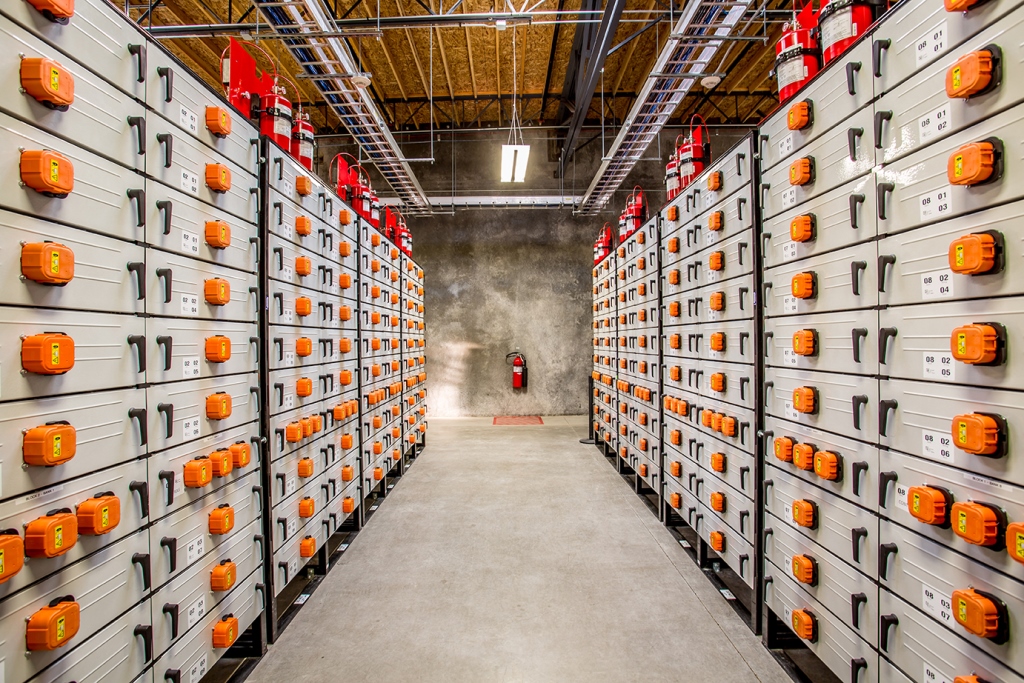
Preview Image: 5-Megawatt, Lithium-Ion Energy Storage System