Scientists have long puzzled over how batteries deteriorate over time.This has become more critical with the advent of battery-power electric vehicles. There have been hints that deterioration is due to chemo-mechanical stress in batteries. Finally, we have a definitive answer. This could be the reason why our batteries do not last as long as we would like.
Scientists Link Degradation to Chemo-Mechanical Stress
A team of researchers gathered to explore this mystery further. They came from as far afield as The University of Texas at Austin, Northeastern University, Stanford University and Argonne National Laboratory.
The team knew that batteries expand and contract every time they charge and discharge, as the result of ions slipping in and out electrodes. You may like to compare this to breathing in and out, to replenish the oxygen in your lungs.
This restless movement causes chemo-mechanical stress in batteries, as their electrodes tense, then relax each time they cycle. The battery gradually weakens. Its performance slowly deteriorates, shortening its useful lifetime.
Strain Cascades in Degrading Batteries
The researchers discovered an intriguing phenomenon as they observed batteries cycling through life. They noted what they called ‘strain cascades’, where strain spreads from one part of an electrode to adjacent areas.
“We were able to see that every particle behaves differently under electrochemical stress,” explains one of the co-authors. “Some particles in electrodes move rapidly, like shooting stars in the sky, while others remain relatively stable.
“This uneven behavior creates localized stress that can lead to cracks and other damage.” Engineers could use these insights to design more robust electrodes, able to overcome chemo-mechanical stress in batteries. But how would this work in practice?
Could Pressure Relieve This Stress?
The researchers have come up with an intriguing idea. How about applying controlled pressure to battery cells, they wonder. We imagine this could provide a supportive environment like a wrist guard on an athlete. Now that’s an idea we have not come across before, in our world of batteries!
More Information
Stresses in Lithium-Metal Batteries
Resolving Silicon Anode Stress While Charging
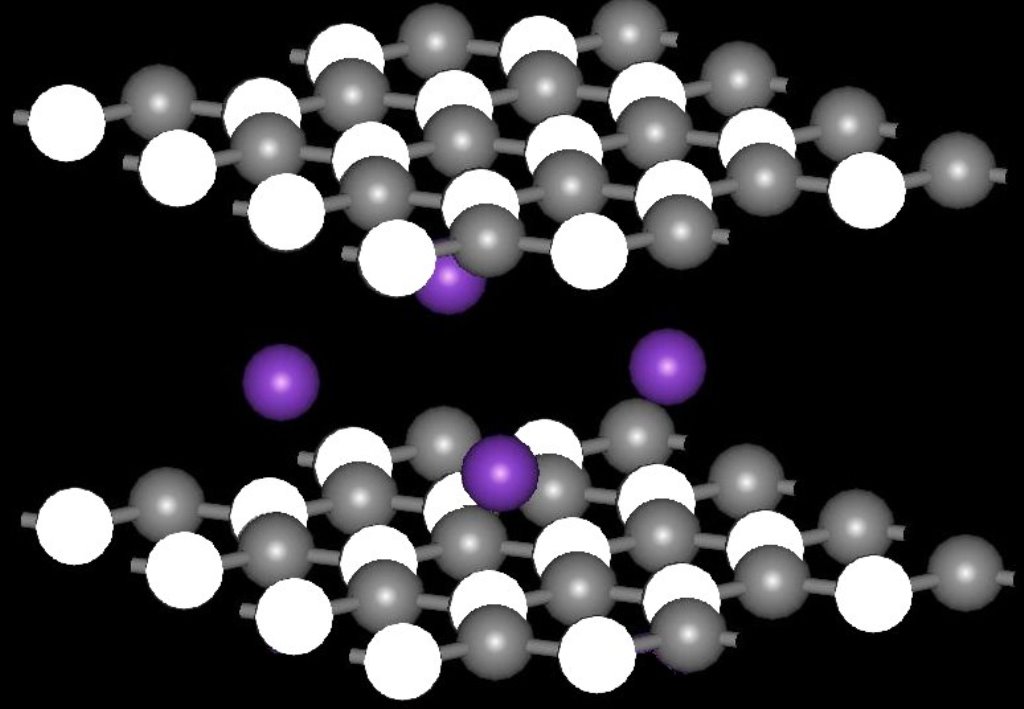
Preview Image: Structure of Intercalation