We have direct and alternating electric current thanks to Edison and Westinghouse competing for space in the emerging electricity industry. Their war of the currents in the 1880’s and 1890’s is over now. The contestants have long gone to their rest, but we still revere them for the contributions they made. However, the distinction lives on in alternating grid electricity, and direct battery current. To complete this series on electrical basics, let us compare the two forms.
Direct and Alternating Electric Current: The Main Distinctions
Direct current (DC) proceeds in an orderly, unidirectional fashion like schoolkids walking down the sidewalk in crocodile formation. It is a flexible form of energy capable of flowing through batteries, conductors, semiconductors, ceramic insulators, and even vacuum ion beams.

Alternating current (AC), on the other hand periodically reverses direction. The electricity distribution industry uses it primarily because Gorge Westinghouse won that part of the war of currents.
However, Edison’s direct current triumphed in modern electronics such as computers, telephones, and automotive systems. He would have liked that, because he was always fiddling with gadgets. Nowadays, direct and alternating electric current coexist on either side of rectifiers and transformers.
Switching Between Direct and Alternating Electric Current
We regularly convert direct and alternating electric current to the alternate form. We can convert direct current to alternating current using an inverter, for example to feed storage battery energy into the grid. Conversely, we can charge batteries using mains power by passing it through a rectifier first. In this instance, the electronic elements inside the device only allow the current to flow through in one direction.
Converting current flow in these ways absorbs some of the energy. Moreover, the inverters and rectifiers are expensive, especially when used in large plants such as aluminum smelters. Life might be simpler if we no longer had direct and alternating electric current existing side by side. However, vested interests, and the costs of conversion will most likely prevent this from happening for a long time.
Related
How Does an Electric Circuit Actually Work?
Bridging Across from Direct to Alternating Current
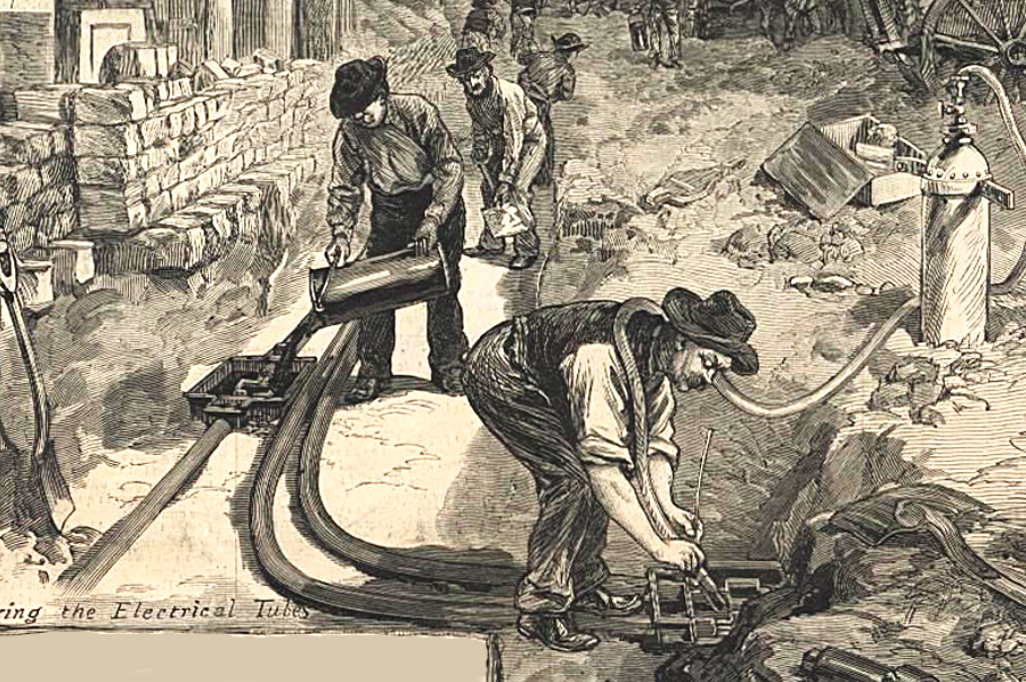
Preview Image: War Of Currents – Laying Direct Current ‘Tubes’