The Neanderthals were perhaps the first Euro-Asian people, that sub-Saharan Africans absorbed into their gene pool after they arrived. Whatever the case, a small, but significant number of those living in the northern hemisphere still have their shadow in their DNA. A study published in journal Biorxiv on December 18, 2020 tackles an intriguing question. Does a Neanderthal gene affect COVID-19 severity?
How Does a Neanderthal Gene Affect COVID-19
The study by three scientists at Vanderbilt Genetics Institute is still subject to review. None the less, researchers Evonne McArthur, David Rinker, and John Capra say the Neanderthal gene affects COVID-19 severity.
We hasten to add out of an abundance of caution their findings are tentative. But they do suggest the gene ‘may double or even quadruple their risk of serious complications from COVID-19’.
The mechanism behind this may be an enzyme that opens a second gateway to the coronavirus. This provides a second channel in addition to the usual infection route via the ACE-2 receptor on cell surfaces. The researchers’ discovered if both parents have the gene, then this could increase their children’s susceptibility.
The Cultural Contribution of the Neanderthal People
The Neanderthal people may have been more culturally advanced than urban legend suggests. They had smaller social structures, perhaps ten to thirty individuals. They adorned their bodies with earthy pigments.
And they also used those pigments for medicine, for tanning hides, as food preservative, and as insect repellent. The scratches they left on cave walls suggest they were capable of abstract thought. And finally, they may have turned hollow animal bones into simple flutes.
Having a Neanderthal ancestor therefore does not necessarily mean a more primitive background. If anything, we have a more complex ancestry, and some cultural shadows of which we may well be proud.
Related
DNA Vaccines Won’t Genetically Modify Us
The Role of Genetics in COVID-19 Infections
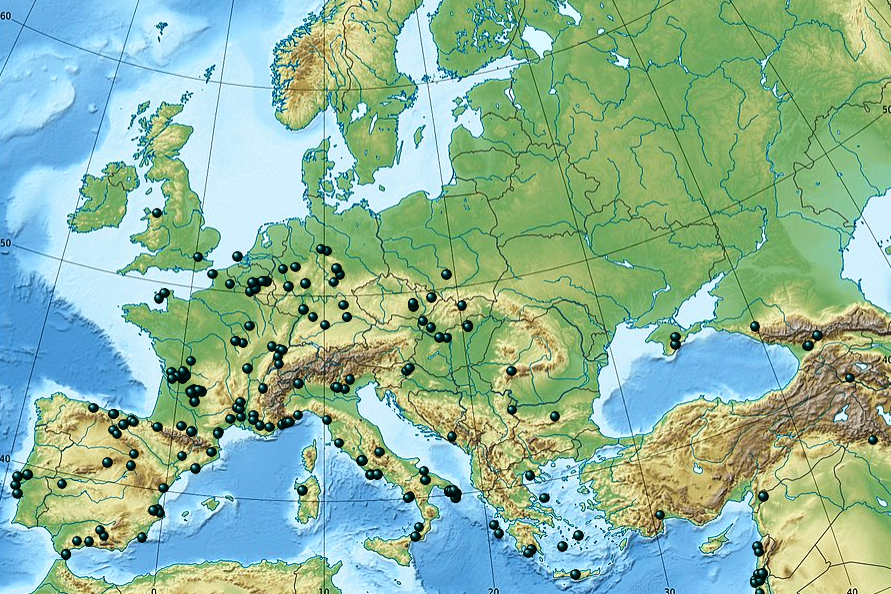
Preview Image: Locations of Neanderthal Finds