Electrochemistry in batteries is a process whereby chemical energy becomes electrical energy, and vice versa. Or, to simplify things further, how you use and recharge the batteries in your phone and so on.
We are speaking of a very fundamental process, that harnesses the natural chemistry in materials around us. Yet, at the same time, we could not use much of our electronic equipment without electrochemistry.
Unpacking Electrochemistry in Batteries Further
Redox reactions are at the heart of battery chemistry. These are processes whereby electrons transfer between substances. A redox reaction comprises two half reactions, namely an oxidation half reaction, and a reduction half reaction:
- An oxidation half reaction involves the loss of electrons.
- A reduction half reaction involves the gain of electrons.
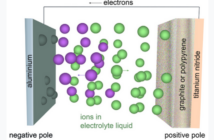
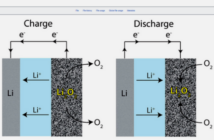
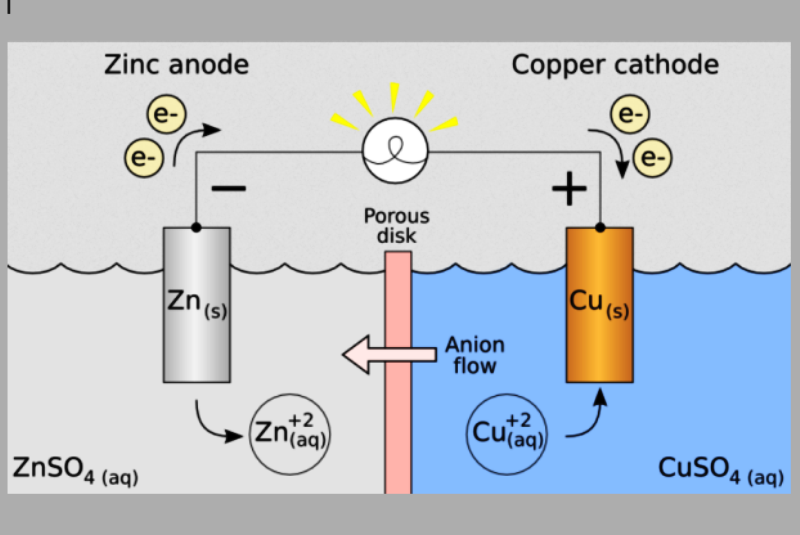
An electrochemical cell, or a single battery, comprises two electrodes in an electrolyte, plus a connection to an external circuit. Two different classes of these cells make electrochemistry in batteries possible. These two types are galvanic / voltaic cells, and electrolytic cells:
- Galvanic / voltaic cells use different metals for their electrodes. This combination changes chemical potential to electrical energy. Common uses include batteries and electrochemical plating.
- Electrolytic cells use the same material for both electrodes. This combination changes electrical energy to chemical energy. Common uses include electrolysis to separate materials.
More About Galvanic Cells in Electrochemistry
Galvanic cells comprise two different metals, each with a different reaction potential, that connect to each other via salt bridges. This combination generates electricity using the two half reactions. The result is a flow of electricity through the circuit connecting the two metals:
- The electrode where the oxidation occurs has a positive potential.
- The electrode where the reduction occurs has a negative potential.
This elegantly simple process that we call electrochemistry in batteries, powers the devices that energize our increasingly complex devices.
Alessandro Volta discovered it more than two centuries ago, although he could have had no idea what his world’s first battery would achieve.
More Information
Electrochemistry in Lead-Acid Batteries
Electrodes Are Fundamental to Batteries