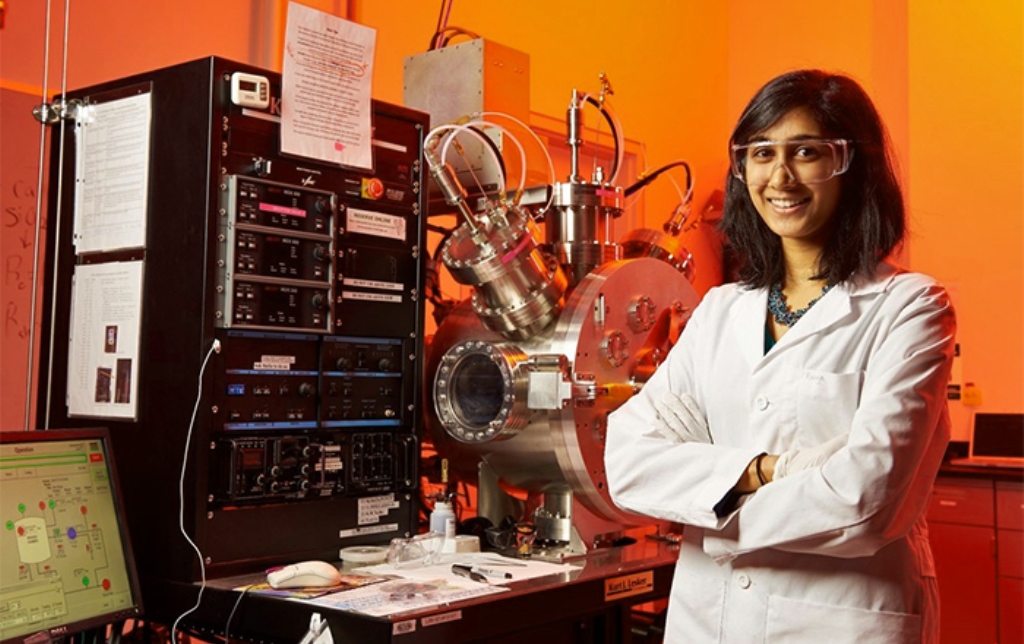
Green energy from wind and solar will be on a knife edge as long as battery storage capacity lags behind. We can’t regulate when those natural forces are online, says Derek Hall. He is assistant prof of energy engineering at Penn State university with a mission. His dream is enhancing storage batteries until they are ready to replace coal and gas.
Enhancing Storage Batteries to Complement Wind and Solar
Wind and solar energy could produce enough power to energize the world. However, the balance in nature ensures these are offline when Earth rotates, or the restless winds are quiet. Moreover, at other times they overproduce more energy than we require.
We could achieve virtual load shifting by storing this surplus energy. This involves temporarily storing it in batteries, much as we curate energy in water with hydro. Assistant prof Derek Hall is investigating the options for beefing up storage batteries. One of these involves using cheaper ‘ligand’ materials to turbo-charge their chemistries.
New Materials for Improving Battery Storage
Ligands are molecules or ions that bind to a core metal host. Lithium, cobalt and vanadium are currently in vogue for enhancing storage batteries, but they are expensive. The Penn State researchers are pairing copper, iron, and chromium with these traditional ligands in the hope of greater cost-efficiency.
Their research will follow a consistent approach using redox flow technology. First, they will thermo-dynamically test how the new ligands affect the potential of the electrodes. Then, they will measure energy harnessed during the kinetic research phase. Finally, they intend to test the entire fuel cell to determine how well the alternative configuration works.
Assistant prof of energy engineering at Penn State Derek Hall admits many parts of the solution are still out there somewhere. Moreover, there is little consensus how ligands affect chemical reactions. Hence there is a need for basic research.
Related
Power from Zinc and Copper in Action
Could Iron Batteries Replace Lithium Ions
Preview Image: Penn State College of Earth and Mineral Sciences
Video Share Link: https://youtu.be/bZyUIiOTgxU