We’ve been writing about capacitors and their history lately. So we decided it was time for an experiment to measure capacitor resistance. It’s a fairly extensive process, because we have to build the capacitor first. The technology is simple though, but by the end of the process you will know more about how capacitors work.
Resources to Build a Capacitor and Measure Resistance
- Some kitchen foil, nice and shiny and never used
- One sheet of standard printer / copier paper
- A pencil, or a similar-size piece of wooden dowel
- Some adhesive tape, two loose crocodile clips
- A multi meter with a good battery and wire leads
Procedure for Preparing for Your Experiment
- Lay the two pieces of paper side-by side on a smooth work surface
- Place one piece of foil on top of each, with paper showing on all sides
- Next, cut two more pieces of foil, say four-inches by one-inch each
- Position one of these on each work piece, so they protrude slightly
- It’s super important that these foil pieces point in opposite directions
- Secure these small pieces to the larger foil pieces using the tape
- Then place one sheet of paper holding the foil on the top of the other
- Finally, roll the stacked sheets into a tube around the pencil or dowel
- It is super important to roll the tube tight, with both small foils protruding
You now have a real, working capacitor. But what turns it on? Well, as you may have imagined, the foil is the dielectric and therefore the active component. However, we are not going to charge the device at this stage. Because we would like you to have an adult present, so perhaps next time.
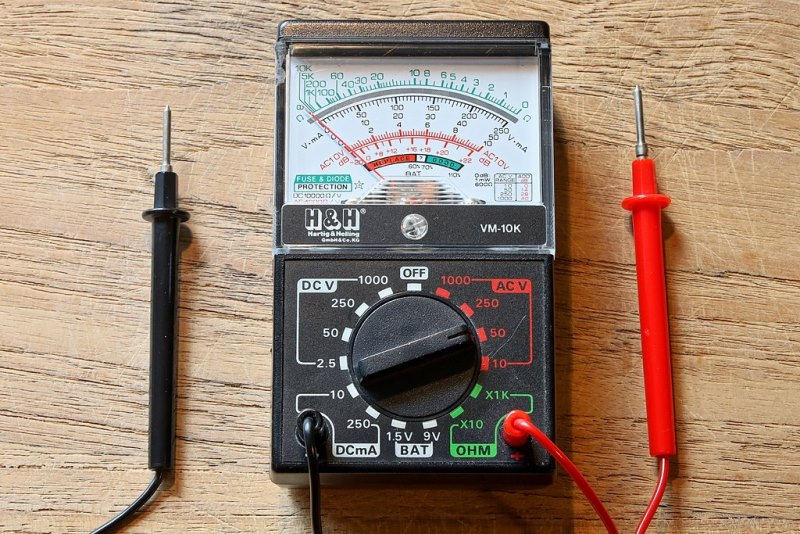
So for now, we’ll just set up the multi meter, connect it to the small kitchen foil tabs, and measure the resistance. You could also experiment with other materials, note the different readings, and research the reasons behind this variance.
More Information
An Introduction to the History of Capacitors
Who Created the First Multiple Leyden Jar?