Christopher Evans is an economist at International Monetary Fund. He fears a fragmenting mineral market will slow clean energy transition, as competing powers scramble for scarce strategic minerals. We have already seen an uptick in new trade restrictions post the Russian invasion of Ukraine, he says. These are affecting manufacture of electric vehicles, solar panels, wind turbines, and other necessities for the green transition.
Huge Uptick in Demand, in Fragmenting Mineral Market
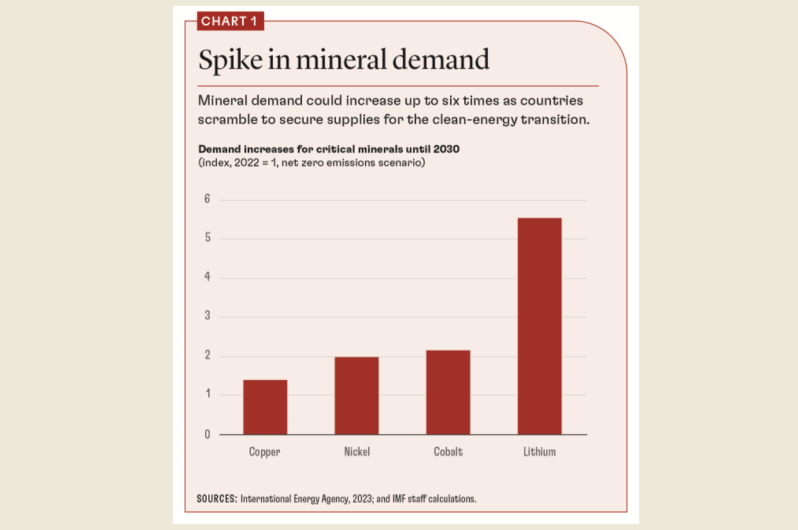
International Atomic Agency predicts a massive increase in global strategic mineral demand by 2030:
- Copper requirements will increase 1.5 times.
- Nickel and cobalt demand will both double.
- We will need 6 times more lithium supplies.
Those escalations in a fragmenting mineral market will drive up prices, Evans continues. He envisages copper, nickel, cobalt, and lithium becoming ‘as important as crude oil for the world economy’.
The above data is a sober reflection, considering an average electric vehicle battery pack contains approximately 17 pounds of lithium, 77 pounds of nickel, and 30 pounds of cobalt. Battery charging stations consume large volumes of copper.
Concentrated Mineral Markets Pile on the Pressure
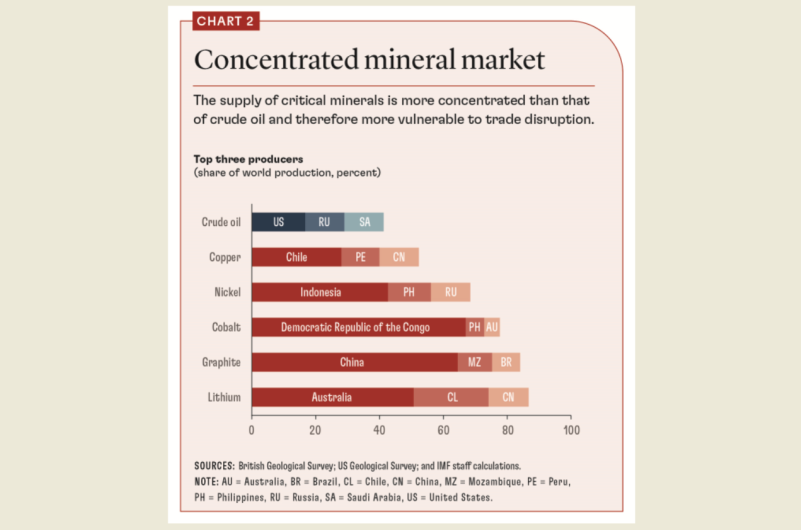
Strategic mineral reserves concentrate in a few hands. Democratic Republic of Congo (DRC) produces two-thirds of global cobalt output, while three lithium and nickel suppliers control over 60% of that supply.
Strategic mineral availability is largely inelastic in the short term, because of challenges expanding it, and / or delays developing alternative materials. This combination of high concentration, and low growth potential is further fragmenting mineral markets, as Russia / China, and U.S. / Europe alliances compete for control of critical minerals.
This confluence of factors is making it more difficult to decarbonize the global economy, Evans observes. He believes ‘multinational cooperation’ must urgently agree a free flow of minerals through a ‘green corridor’. For if it does not respond collectively, he fears, then the clean energy transition may falter, and efforts to mitigate climate change will slow.
More Information
Extending the Life of Critical Battery Minerals
Vacuuming Battery Minerals From The Sea Bed