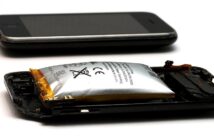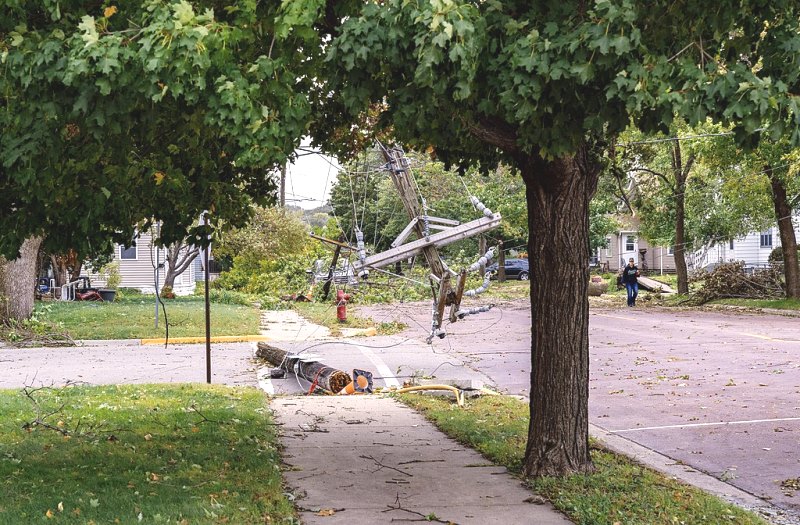
Some critics believe electricity-supply utilities are spending too much money on new power lines to repair storm damage. Green Mountain Power, delivering electricity to Vermont, New England has asked state regulators to allow it to supply free storage batteries to customers instead, because it believes this will be cheaper than upgrading the grid.
A Major Departure: More Than Just Free Storage Batteries
However, those free storage batteries are only part of the proposed solution. Green Mountain Power also wants to bury power lines, and strengthen overhead cables according to New York Times. But this is a departure from traditional grid practice. Will the regulators approve the idea?
“Call us the un-utility,” says Green Mountain’s chief executive Mari McClure. Most utilities traditionally make money by building and operating power lines that deliver electricity from bulk suppliers. She wants to protect what she has, and build fewer new lines. “We’re completely flipping the model, McClure adds. “We are decentralizing it.”
Why Is Green Mountain Power Doing This Now?
Extreme weather has hit Vermont badly this year. Half a dozen severe storms – including major floods in July – caused power outages according to New York Times. When the utility did its sums, it realized providing free batteries to homes would be cheaper than erecting more power lines to improve its system.
This latest strategy is actually an extension of a current offering to lease home batteries to customers. However, this time the capital outlay will be a significant US$ 280 million, including strengthening the grid. “We don’t want the power to be off for our customers ever,” McClure explains. “People’s lives are on the line.”
The first phase of her new strategy involves delivering free storage batteries to the most vulnerable customers. This work will roll out to all customers by 2030. In the interim the utility will also be relocating some power lines underground, while installing stronger cables where this is not feasible.
More Information
Distributed Utility Backup on Neighborhood Poles