There are two main types of transistors, which are in fact special cases of diodes. We already wrote about MOSFET’s. Today, we are going to discuss bipolar transistors. But first, what does the word ‘transistor’ come from? ‘Transist’ means to make a transition from one state to another. For example in the movies, it refers to shifting from one scene to another.
The Roles Bipolar Transistors Play in Electronics
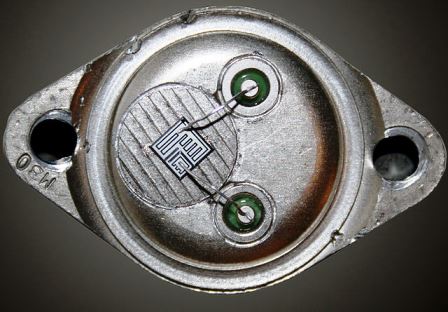
Bipolar transistors comprise of semiconductor material. They have at least three terminals connected to an external circuit. In this way, this distinguishes them from diodes that have only a single pair.
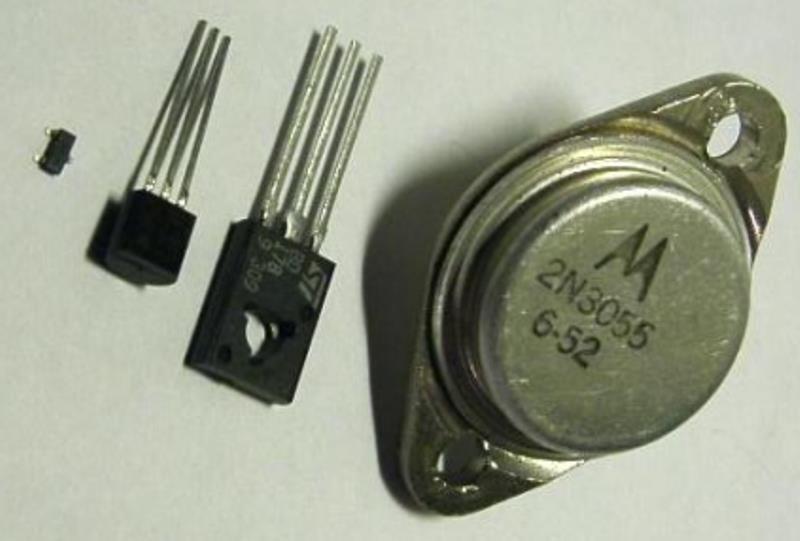
They mostly have one of two jobs to do. These are namely to switch the flow of current, or to amplify it.
If we join two diodes back to back, we have two positive-to-neutral junctions. But they would share a common neutral or positive terminal. We call this a bipolar junction transistor. This abbreviates to BJT.
Where the junction is at the neutrals we call it a PNP. The opposite arrangement is an NPN. The ability of these devices to insulate, or to conduct signals forms the basis of most electronic transactions today.
Common Applications for BJT Transistors

We have loads of bipolar transistors in all our electronic devices. Some companies make billions of them every year. These may be standalone devices, or they may embed in integrated circuits.
They play an important part in high-speed digital logic, and logarithmic conversions. Their other roles include signal amplification, and temperature sensing.
Transistors burst onto the world stage in the 1950’s in the form of transistor radios. For the first time ever, these introduced transportable entertainment to human culture.
In response, factories churned out billions of them. In fact, they are still the most popular electronic communication device in history, ever.
Smartphones have a way to catch up. However. we find it difficult to imagine life without bipolar transistors today. Some are as small as grains of rice, but with the power to transform our lives.
Related
How MOSFET Transistors Amplify Signals
The Single-Minded Determination of a Diode
Image Acknowledgement: Darlington Transistor