The global battery boom may seem impressive, as it successfully chases renewable energy demand. However, to date it has not taken a leadership role, and as a result total capacity only increased 130% year-on-year. This is way behind where we should be now, according to International Energy Agency (IEA). The global battery roll out must accelerate, they say, if we are to meet our climate change plans.
IEA Believes the Global Battery Roll Out Is Seriously Lacking
The International Energy Agency (IEA) report (see link below) confirms structural progress in terms of falling costs, advancing innovation, and supportive industrial policies. Battery prices have fallen 90% in 15 years. However, the bulk of expansion has been in the power sector, with good growth in electric vehicle sales too.
“The electricity and transport sectors are two key pillars for bringing down emissions quickly enough,” says the IEA executive director, “to meet the targets agreed at COP28, and keep open the possibility of limiting global warming to 1.5 °C.
”Batteries will provide the foundations in both areas,” the IEA report continues. Solar panels and batteries will soon be cheaper than new coal and gas-fired power stations, in United States and China. However, the report emphasizes global battery roll out is still too slow, and we must accelerate progress.
Battery Deployment Will Need To Scale Up
Battery deployment will need to scale up considerably, the IEA report continues. Here it speaks of increasing overall energy storage capacity six-fold by 2030 worldwide. Battery storage could account for 90% of this, with pumped hydro power providing the rest.
However, battery costs will have to come down further, the IEA believes, but without compromising quality and technology. Some 40% of announced plans for new battery manufacturing are in advanced economies such as the United States and the European Union. Many other parts of the world are still lagging badly.
More Information
How Could a Circular Battery Economy Work?
How Good Is Sodium-Ion Technology
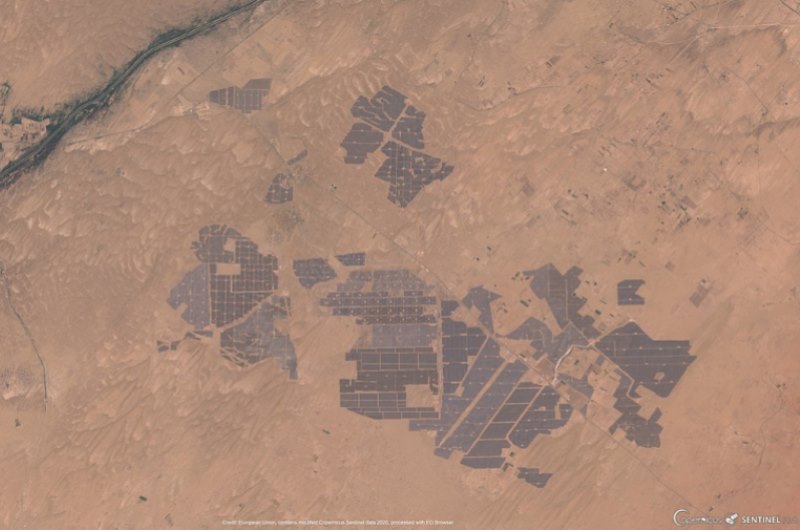
Google Image: Bhadla Solar Park in India