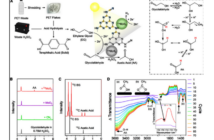
Researchers at Technical University of Vienna, have created a new nanocatalyst from spent batteries and aluminum foil residues. This tool converts CO2 to methane gas, that households can use for heating and cooking. The green energy from spent batteries and aluminum foil residues, could also power trucks, buses, and ships as liquefied natural gas.
Shouldn’t We Recycle Spent Batteries Into New Ones?
That’s perfectly correct, and the researchers at Technical University of Vienna respect that principle. However, in this particular instance, they believe they can have an even greater impact, by up-cycling nickel into catalysts capable of producing fuels:
- First, they obtained nickel from spent nickel-metal hydride batteries.
- Then they recovered alumina material from used aluminum residues.
The researchers then transformed those two materials into a single, high performance nanocatalyst, using what they refer to as ‘renewable energy methods’.
TWO DEFINITIONS WE FOUND USEFUL
- A CATALYST increases the rate of a chemical reaction, without itself undergoing any permanent chemical change.
- NANOCATLYSTS increase this reactivity and catalytic activity, due to their high surface-area-to-volume ratios.
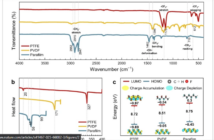
“Our nanocatalyst consists of 92% to 96% aluminum oxide, and 4% to 8% nickel” the researcher Günther Rupprechter explains. “This is optimal for converting the greenhouse gas CO2, together with hydrogen, into methane,” he adds.
“The process requires neither high pressure nor high temperatures,” Rupprechter continues. “The catalyst works at atmospheric pressure, and an easily-achievable temperature of 250°C.”
Why Produce Green Energy Methane Gas This Way?
Well in the first instance, the raw materials are readily available for recycling, and we should repurpose them for something. Methane gas is the main component of natural gas, which generates electricity in a greener way than coal.
Although, at the same time, we are duty-bound to concede that highly explosive methane is a powerful greenhouse gas, contributing to global warming. And that methane, in significant quantities, degrades air quality to the extent that it affects human health, agricultural yields, and ecosystem productivity too.
None the less, Massachusetts Institute of Technology views this as a positive step. One that “could have the potential to cover the energy needs of industries and cars”, using waste materials. Creating green energy from spent batteries could hence prove useful, in the transition to a truly green economy.
More Information
Recovering and Recycling EV Batteries
Reasons for Recycling Lithium-Ion Batteries
Preview Image: Transforming Battery/Aluminum Waste
News Item From Technical University of Vienna