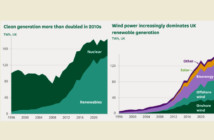
Grid-scale battery storage is a large-scale version of our image for this post. In that former case we imagine massive efforts, like the 2027, 5,000-megawatt Xlinks Morocco-to-UK green energy proposal. On a smaller scale, we believe our image says everything. Capture the energy from the wind and the sun, store it in batteries to smoothen it out, and draw the clean energy on line when we need it.
A Brief Summary of Grid-Scale Battery Storage
We can liken energy storage to a virtual power station. In this case, it extracts energy from a renewable source, and transmits it to the grid, unlike a power station that relies on fossil fuel. This green technology is able to start up and transmit in nanoseconds, unlike a coal or nuclear power station that can take longer than a day to be up and running.
However, and here’s the current catch, the batteries we have can only deliver their energy for a few hours at most. And as a result, grid-scale battery storage is only currently practical in power correction and peaking support roles. Such installations can be located even within urban areas if necessary, opening the possibility of ‘islanding’ key facilities in a crisis.
Scaling Up and a Fresh Look at Batteries
Those limitations of grid-scale battery storage have a knock-on effect on the future of renewable energy. Whereas old fashioned coal power stations can generate electricity around the clock regardless of the conditions outside, wind and solar can only do so when these circumstances are appropriate.
This leaves the world with two options if we are serious about implementing universal green energy. We either have to massively up-scale the capacity of batteries, or we have to find alternative forms of energy storage that are practical at grid scale level.
This is a massive project that requires large-scale government intervention, if we are to reach that point throughout the world in time to reverse global warming.
More Information
Advanced Energy Storage Overview