We’re intrigued by a concept we stumbled over on Clean Technica, and link to it below. The writer of that article is based in Australia, although we can’t imagine the idea not working in North America too. The beneficiaries of home-grown hydro-battery power would largely be farmers, not wishing to install solar panels or wind turbines.
Farm Dams for Home-Grown Hydro-Battery Power
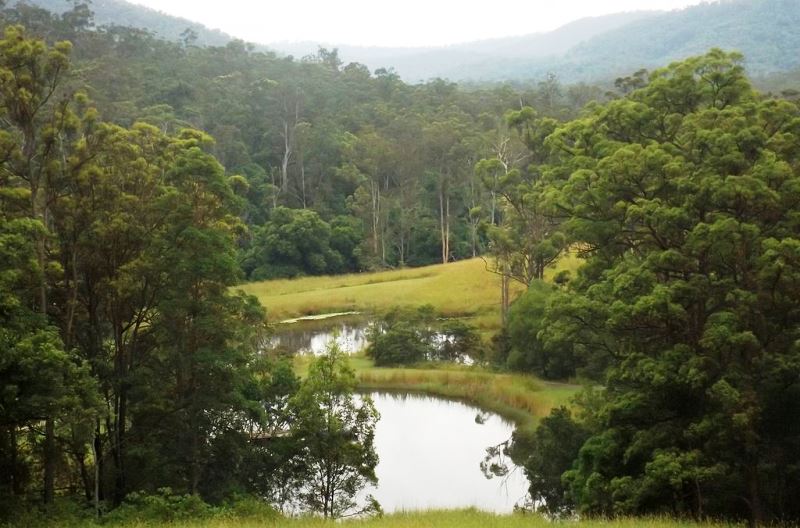
Many farms are on undulating countryside with regular streams running through them. Farmers there often create a series of small dams, following a regular water course. They have several reasons for this strategy, including ‘insurance’ against one dam failing. Other reasons may include having stored water conveniently nearby cultivated fields.
In olden industrial revolution times, people with an entrepreneurial spirit used the force of flowing water to turn generators. Since then, larger hydro dams took over, although the mill ponds and giant water wheels are still quaint reminders of the past.
We don’t need rocket science to latch onto the Clean Technica idea. All a farmer would need is a suitable head and flow of water, between two small dams. The author of the article spoke to Nicholas Gilmore at University of New South Wales to find out how a home-grown hydro-battery system would work in practice.
Basic Requirements for Energy from Farm Dams
System requirements include (a) a regular source of water, (b) a pair of suitable dams, and (c) a reversible generator-motor to harvest energy from the water movement. And finally, the system would need a suitable battery-inverter set, to cleanse and store the electricity for future use.
Nicholas Gilmore from University of New South Wales, developed these basic requirements to make the idea practical on the ground:
- A pair of dams no more than 1,500 feet apart.
- Capacity to store 24 kWh when 70% full.
- A slope between the dams of at least 17%.
“Like any new technology, it’s sort of inefficient,” Gilmore admits. “So it has scope to get better in the future. We’re at the stage of jury-rigging pumps from other applications, and running them in reverse to generate power”. We’ve learned a satellite survey identified 30,000 pairs of Australian dams, where a home-grown hydro-battery system appeared feasible.
More Information
What is pumped-storage hydroelectricity?
Alternative Energy Storage Round Up