The first batteries transformed electrical science, but they had one major disadvantage. Once they used their chemical materials, the battery could no longer produce electricity. Would you like to know more about how early rechargeable experiments failed?
Scientists Search For Ways To Reverse These Changes
Scientists soon began searching for a way to reverse the chemical changes and recharge a battery. Early experiments revealed that this was far more difficult than simply connecting a battery to another source of electricity.
A rechargeable battery needs chemical reactions that work in both directions. The materials had to survive repeated charging and discharging without breaking down.
One Of The Early Pioneers Was William Robert Grove
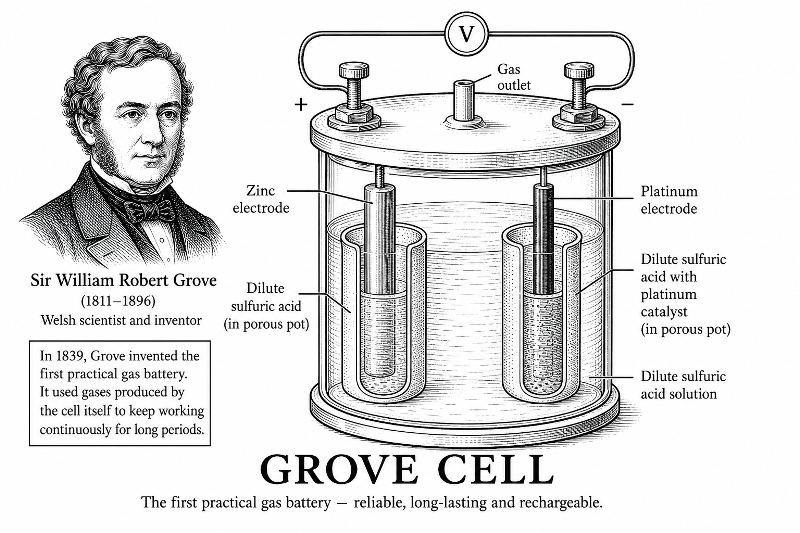
One of the early pioneers was William Robert Grove, who developed an improved battery in the 1830s. His work helped advance electrochemistry, but the early cells were not designed for convenient everyday recharging.
Other researchers experimented with different metals and electrolytes, hoping to discover how early rechargeable experiments failed.
The Problems Were Numerous. Electrodes Could Corrode
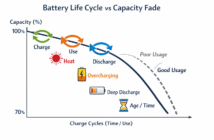
The problems were numerous. Electrodes could corrode, active materials could be lost, and chemical reactions could produce unwanted gases. Repeated charging could also change the structure of the electrodes, reducing their ability to store and release energy.
A further difficulty was cost. Even when an experiment appeared to work, the battery might require expensive materials or careful handling. A laboratory demonstration was not necessarily a useful product for homes, transport or industry.
The Breakthrough Came In 1859, With Gaston Planté
The breakthrough came in 1859, when French inventor Gaston Planté developed the first practical rechargeable lead-acid battery. His design used lead plates in sulfuric acid, and could recharge repeatedly after improvements to its construction.
Planté’s Invention Did Not Solve Every Problem
Planté’s invention did not solve every problem, but it proved that rechargeable batteries were possible. Later inventors improved the plates and manufacturing methods, eventually making lead-acid batteries useful for starting engines, powering equipment and storing electricity.
More Information