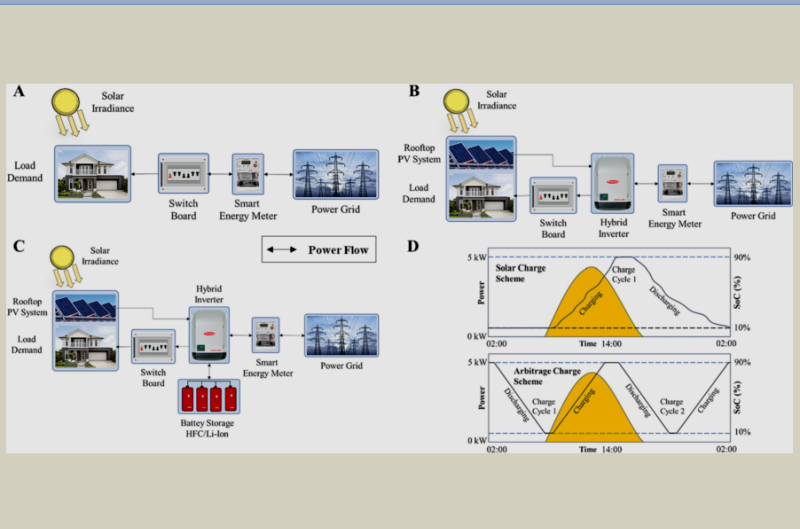
Metal-hydride batteries use hydrogen-storage-alloys as their negative electrodes. This arrangement delivers relatively higher density, or capacity to store energy. Lithium-ion batteries, on the other hand typically use graphite coatings for their negative electrodes. This delivers a higher voltage. A team at University of New South Wales compared lithium-ion and hydrogen solar storage to determine which teams best with rooftop solar.
Lithium-Ion and Hydrogen Storage Batteries in Solar Trial
The New South Wales University team compared the performance of branded metal-hydride batteries with their lithium-ion competitors. Their report in the Journal of Energy Storage (see link below) summarizes their findings as follows:
- Both battery types are compatible with rooftop solar panel systems.
- Lithium-ion batteries have greater capacity for potentially higher income.
- Metal-hydride batteries last longer, delivering more enduring storage.
- Metal-hydride batteries are more expensive compared to lithium-ion.
- Hydrogen solar storage requires water which is not always available.
- Lithium-ion batteries therefore promise better payback from utilities.
Unpicking and Expanding This Discussion
The University of New South Wales observed both solar energy storage systems in simulations, as they aged and progressively degraded. The lithium-ion battery achieved financial break-even years sooner, despite the metal-hydride version having 18% more charge cycles according to YTECH News.
PV Magazine also followed the research, commenting how the lithium-ion battery had lower round-trip energy losses. This term refers to the percentage of stored electricity actually available to the user. In other words, the higher the round-trip efficiency, the less energy is lost in storage.
The researchers concluded their report by observing that the final choice, “depends on the availability of water resource, weather extremes, and the trade-off between the preference for greater financial profit, or extended battery cycle life”.
More Information
Metal-Hydrogen Battery on Trial in Virginia
Heat Flows in Lithium-Ion Batteries Yield Clues