Demand peaks are not a power utility’s best friend. Sometimes they occur in familiar patterns, like American families preparing breakfast in a narrow band in the morning. Or the nation’s televisions turning on when they return from work. Utilities can plan for these with peaking gas and battery arrays. However, unseasonable cold snaps and heat waves are another thing. Fortunately, we are beginning to see intelligent batteries responding to peak demand.
Intelligent Batteries in Hybrid Buildings

In time, we hope to see large, commercial buildings completely off-grid. These will first source energy from the wind and the sun. Then they will store and stabilize the electricity in battery storage facilities.
These automated batteries will sense demand, and then release power to office workers’ computers. This will be a huge step forward from load losses through friction along hundreds of miles of electricity pylons. However, technology must still catch up with our dream, because ‘da sun don’t always shine, and da wind don’t always blow.’
The first generation of intelligent batteries forms a bridge between on-site renewable power, and electricity coming in from the grid, by balancing the blend.
During off-peak periods, the batteries charge from renewable sources. Then they substitute for the grid during high demand, when electricity prices are high and it makes sense to use the electricity
How South California Edison Sees this Evolving
The South California Edison utility is taking this logic a step further. It wants to create megawatt-size intelligent battery nodes at key strategic points in the Los Angeles Basin. These power storage facilities will be at points where heavy demand spikes at peak. When the intelligent batteries sense the grid is straining, they will pour their power into it, and help the utility over the hump.
Related
New Eco-Village Using Lead-Acid Storage
Grid Frequency and How Batteries Help
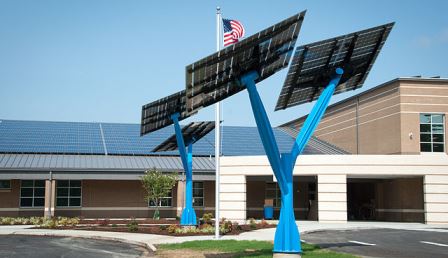
Preview Image: ‘Solar Lift’ at Net-Zero School