Blythe means a cheerful, carefree spirit, and that describes Professor James Blythe to a ‘T’. Blythe was a happy fellow working among students at Anderson’s College in Glasgow Scotland (now University of Strathclyde). They in turn appreciated his hard working nature, down-to-earth attitude, and willingness to roll up his sleeves. James Blythe’s wind power generator goes down in history as a ‘voice calling in the wilderness’.
James Blythe’s Calling in Life
Blythe was the son of a small farmer / innkeeper. He was a bright lad and obtained a scholarship leading to a Master of Arts in 1871. After he died in 1906, his obituary read, “His students … will cherish through life, with reverence and affection, the memory of their teacher and friend.”
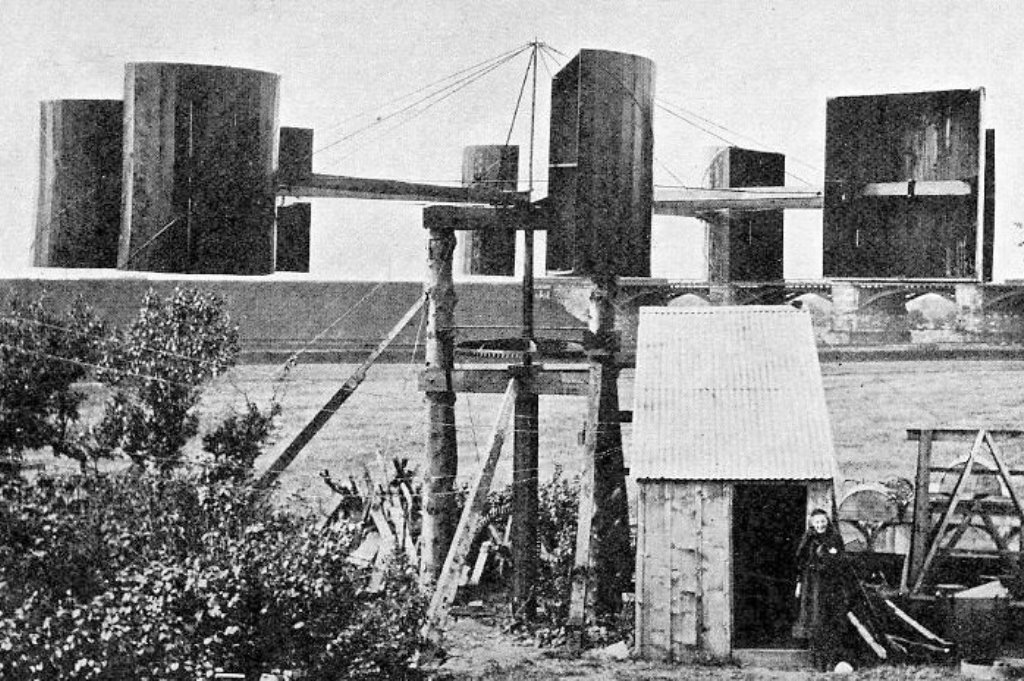
The Scottish academic was particularly interested in the generation and storage of electricity. He liked the idea of wind power because it would be less expensive. When a fellow academic mocked him, he built a prototype at his holiday cottage in Marykirk in 1887 to prove his point. Like most of James Blythes other ideas, it worked exceedingly well.
The World’s First Wind Power Station
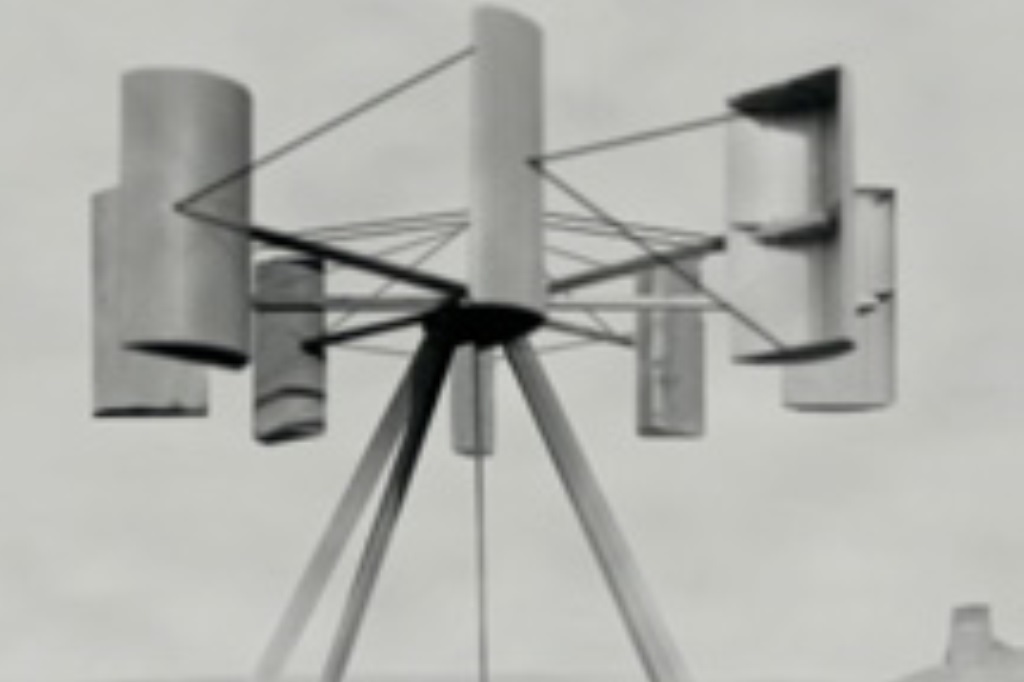
James Blythe later described his invention as being, “of a tripod design, with a 33-foot wind shaft, four arms of 13 feet with canvas sails, and a Burgin dynamo driven from the flywheel using a rope,” and supplying an accumulator battery.
His generator produced enough electricity to light ten 25-volt light bulbs in a ‘moderate breeze”. However, when he offered to light the high street in the village, the residents rejected the idea as “the work of the devil”.
So instead, he built an improved version that supplied emergency power to a local hospital from 1891 for 30 years. This worked successfully although it did have a tendency to stall in high winds. In 1914, someone dismantled James Blythes aging equipment, and scrapped the parts. All we have of it are a few photographs.
Related
Harvesting the Power Blowing in the Wind
Pitch Control Alignment, Wind and Batteries
Preview Image: Marykirk High Street