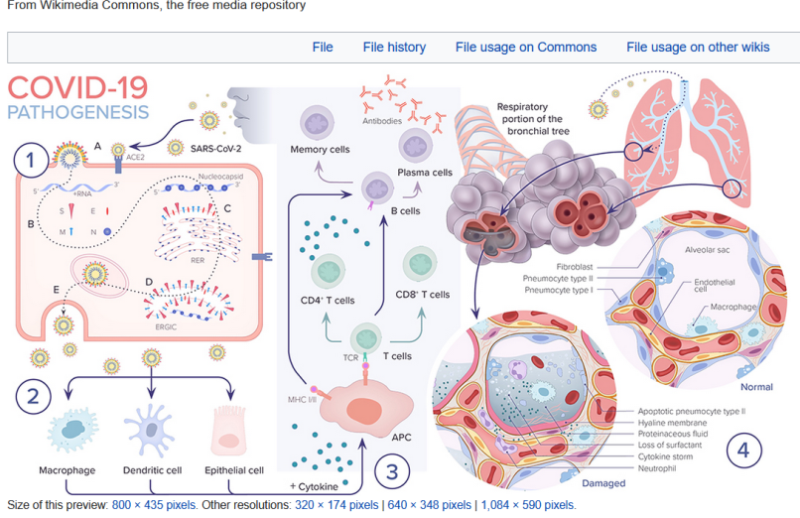
Our lungs are susceptible to COVID-19 complications, because the air we breathe flows through them. Therefore, they are often one of the first parts of our bodies the coronavirus attacks. Moreover, as we know we cannot survive on our own without breath. Today we turn our attention to lasting lung damage from COVID-19 infections.
What Could Happen When COVID-19 Enters Our Lungs
We say ‘could’ because only a few of us will develop severe lung infections if we catch the disease. However if we did, then John Hopkins Medicine warns we could suffer pneumonia, or acute respiratory disease syndrome. Or risk sepsis triggering a chain reaction rapidly leading to tissue damage, organ failure, and even death.
Pneumonia fills our lungs with liquid, displacing capacity for the air we breathe. We may need breathing assistance in hospital. However, we may still face lasting lung damage from COVID-19 after we recover. This could mean having tight breathing for months, even years.
Acute Respiratory Disease Syndrome sets in if doctors are unable to manage the pneumonia. Fluid leaking from tiny, damaged blood vessels can result in lung failure. Breathing assistance should provide an opportunity for them recover. However, our lungs will have scars for our lifetime, and we will never be the same again.
Three Factors Influencing Lasting Lung Damage from COVID-19
John Hopkins Medicine informs there are three make-or-break factors after the COVID-19 virus enters our lungs, and starts causing damage:
1… The severity of the disease depends on the extent of the infection, and our natural resistance to the virus. Keeping the infection mild facilitates transfer of oxygen to our blood, and reduces the risk of lung cancer.
2… Existing medical conditions – specifically chronic obstructive pulmonary disease or heart disease – can worsen the impact. Our lung tissue becomes less elastic, and our immunity gradually evaporates as we age.
3… Medical treatment by professionals is key to surviving an acute COVID-19 infection. Our recovery would depend on the quality of the treatment, and how soon. This is not a case of staying at home, and seeing if we get better.
Recent
High Potent Nanobodies Neutralize the Virus
Age Gender and Early COVID-19 Symptoms
Preview Image: Progression of COVID-19