When Goldman Sachs called flammable lithium the new gasoline of the future, they were thinking of it as an investment. Certainly, lithium battery powered vehicles are causing flutters in the oil industry.
Fossil power stations running on gas and coal have been watching from the sidelines without a worry. They know the sun does not shine around the clock. Moreover there are many days when there is insufficient wind to spin the turbines. It seems as if they hardly noticed renewable energy storage batteries.
Will We Have Enough if this New Gasoline Forever?
That could become a problem. We have been using lithium in ceramics, glass, grease, and polymers for some time. Nobody really worried about the sustainability of the material until lithium batteries challenged the position for ‘new gasoline’.
Goldman Sachs’ Swiss counterpart Credit Suisse has a different perspective. It thinks demand could outstrip supply by 2020 and that’s just around the corner!
In 2014, global consumption of the potential new gasoline stood at 190,000 tons. According to Credit Suisse, this will double by 2020.
The main driver is the global shift to green power especially through electric vehicles. The challenge is finding ways to extract more lithium.
Three Methods for Extracting More ‘New Gasoline’

There are two established ways to extract lithium, knowing that it does not exist in a pure state because of volatility. One is the Australian method of hard rock mining.
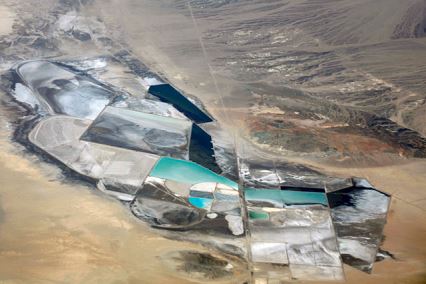
The other involves extracting it from brine in evaporating ponds. Neither method is efficient, nor environmentally friendly. This runs counter to lithium’s role in ridding the world of global oil dependence.
The company Pure Energy in Clayton Valley, Nevada is developing a third alternative. It is trialing a project to extract lithium directly from brine using solvents. There are claims of 99% recovery of ‘new gasoline’ compared to evaporation’s 40 to 50 %. This will be an interesting one to watch.
Related
Improved Storage … Answer to Increased Use of Renewable Energy
Longer Lasting Rechargeable Lithium Batteries with Silicon Electrodes