A lead scientist from Massachusetts Institute of Technology, MIT claims a new design that is six-times cheaper than lithium-ion. Moreover, the materials are organically available in large quantities. We investigate his new battery design from abundant materials, and award it our thumbs up for small-scale stationery storage.
The Rationale Behind the New Design
‘I wanted to invent something that was better, much better, than lithium-ion batteries for small-scale stationary storage. And ultimately for automotive applications too’, explains Don Sadoway. Now he may be the John F. Elliott Professor Emeritus of Materials Chemistry, but his team included members from China, Canada, Kentucky, and Tennessee too.
His rationale was the urgent need to develop companion storage batteries for ever larger wind and solar power installations. That’s because he considers the current generation of lithium-ion batteries are simply too expensive for these projects. And topographically-speaking, suitable pumped hydro storage sites are fairly rare.
But Don Sadoway only wanted to use cathode, anode, and electrolyte materials that were inexpensive, and commonly available. And so he embarked on a path many of his colleagues have followed unsuccessfully in the past.
New Battery Design from Abundant Materials
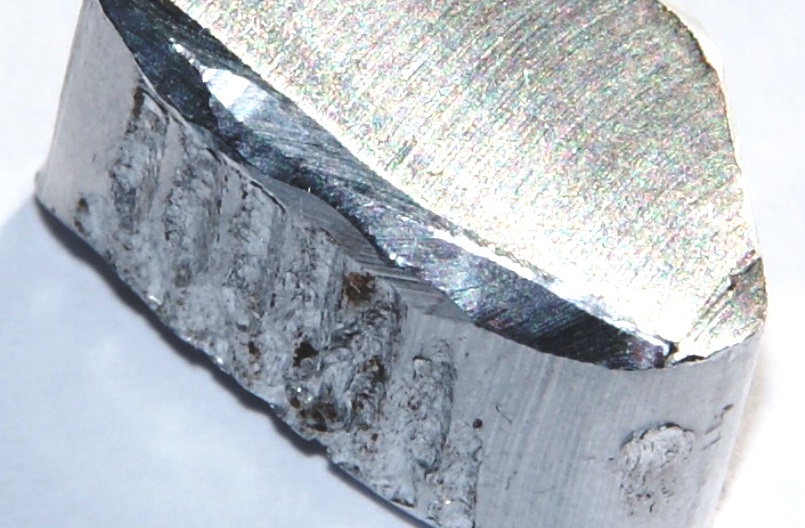
His team’s battery design uses aluminum and sulfur as its two electrode materials, with a molten salt electrolyte in between. However, the search for that combination began with looking through the periodic table for a cheap alternative to lithium. That’s how the most abundant metal on earth, aluminum became the corner stone of the project.
With one electrode settled, they chose sulfur as the second one completing the metal / non-metal combination. They wanted to team these with a non-flammable electrolyte and settled on molten chloro-aluminate salt.
Their new battery design from abundant materials appears to be a resounding success. Don Sadoway and his team report their prototype achieves ‘hundreds of cycles at exceptionally high charging rates.’ And with ‘a projected cost per cell of about one-sixth that of comparable lithium-ion cells’ it surely deserves our thumbs up.
Breaking News
How Conventional Storage Batteries Work
How to Dispose of Used AA Batteries Legally