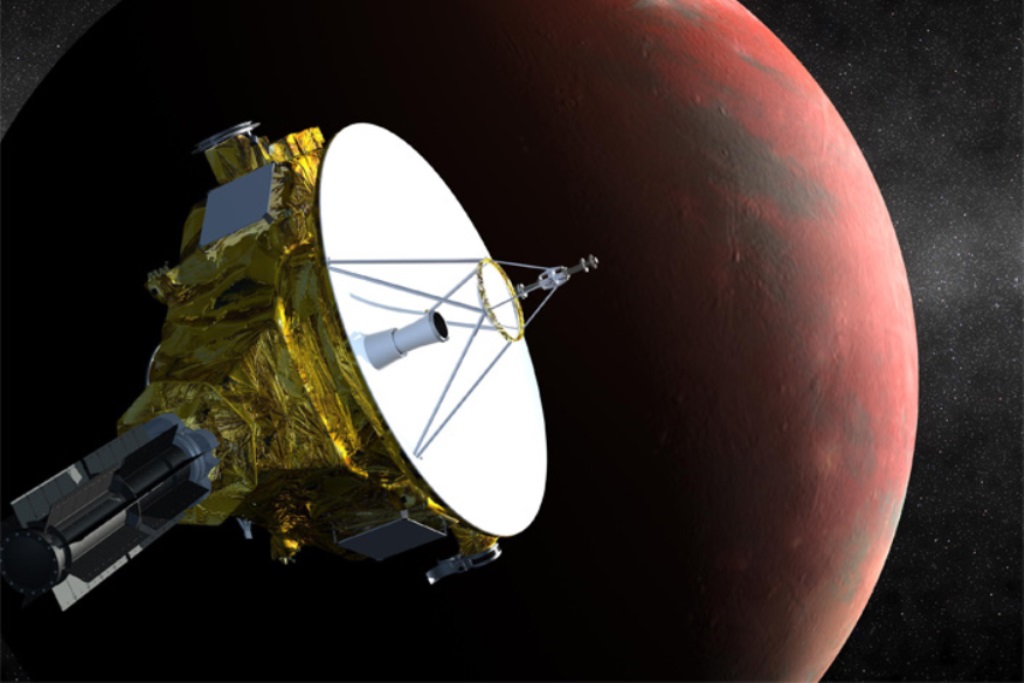
If a battery is a store of energy then plutonium dioxide could be the ultimate one. It is an extremely stable compound, but warm to the touch owing to radioactive alpha decay. The New Horizons radioisotope generator uses thermo-electric engineering to convert this heat to electricity. It has being doing so faithfully since January 19, 2006.
But New Horizons Radioisotope Generator is Running Down
According to NASA, the probe’s fuel load weighed 24 pounds when launched. At that stage it delivered 240 watts of power, but this has gradually dwindled to 202 watts. After a few more years the New Horizons radioisotope generator will no longer be able to provide a full 30 volts of DC power.
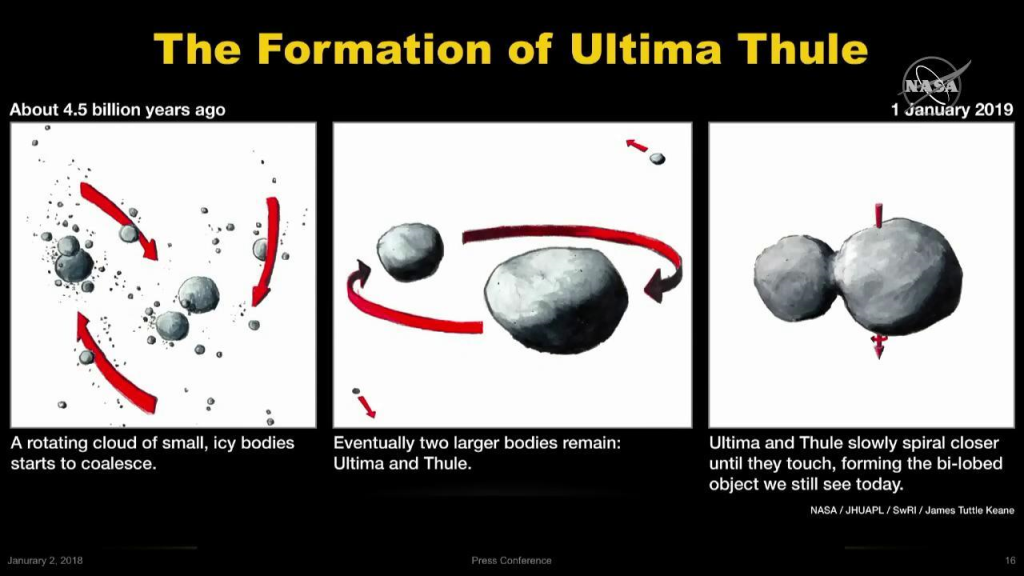
The onboard systems will cease functioning then, and the transmitters will fall silent when that happens. However the probe will continue on its journey through space, silently observing things we can only imagine. It has begun transmitting hundreds of images, spectra, and other data types about asteroid Ultima Thule, but this process is slow.
The Ultima Thule Data Dump Will Take Another 20 Months
The New Horizons space probe is a very long way from Earth, and at the furthest point in our solar system an Earth spacecraft has visited. Its name means ‘a place beyond the known world’, or should we say our solar system?
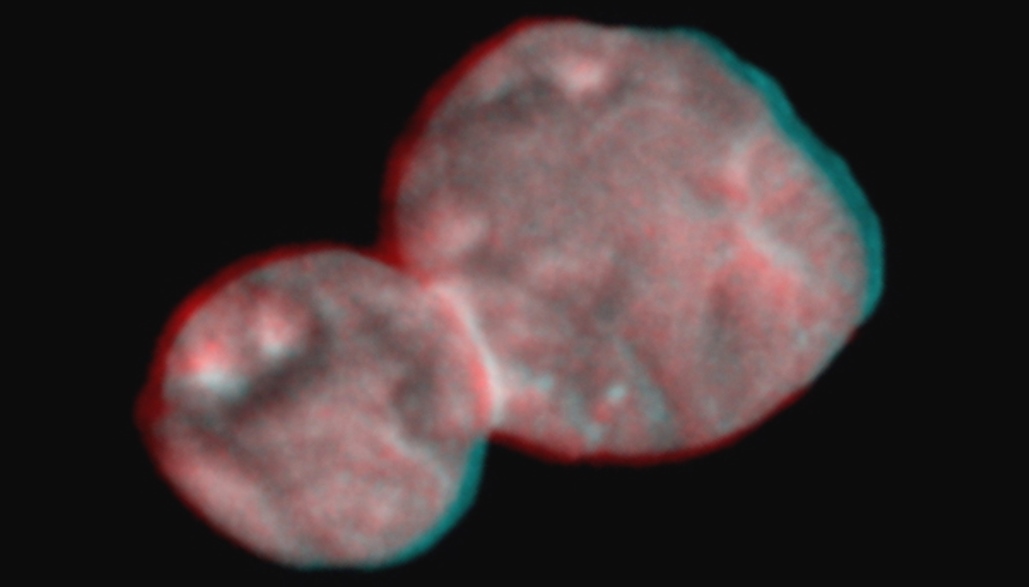
As we write on January 7 2019, the asteroid is currently on the far side of the sun and cannot transmit for another three days. What we have seen thus far is very interesting, because Ultima Thule has changed little since its creation. The small space object measures 20 miles on one axis, and varies between 12 and 9 miles on the other.
It is part of the Kuiper Asteroid Belt. This could be ‘space dust’ left over from the ‘big bang’ that was too small to ‘condense’ into larger planets, although this is only one theory.
Related
Voyager 2 Thermonuclear Generator Triumph
Insight Power Supply for the Mars Lander
Preview Image: New Horizons Probe Passing Pluto