Despite promising results for sodium and magnesium, lithium-ion batteries continue to power the world’s mobile phones. That’s because they offer unrivaled capacity squeezed into a thin shape. Lithium metal is currently abundant, although each electric car contains 700 mobile phones’ worth. A new re-use for old cell batteries could reduce pressure on demand.
Researchers Report a New Re-Use for Old Cell Batteries

Tech Explore reported the research project on March 3, 2020. Scientists from University of Cordoba (Spain), and San Luis University (Argentina) got together to search for a way to re-manufacture cell phone batteries from old ones. This is an important task, given the vast amount of electronic waste the world generates annually.
They knew graphite is a critical material for negative anode electrodes in cellphone batteries. Moreover, it is chemically stable and therefore easy to manually recover. After that, they removed impurities in the graphite by leaching it in hydrogen chloride. Leaching is a method for removing substances from solids using liquids.
How They Tested Their Purified Graphite Anode

The researchers from Argentina and Spain teamed their reconstituted graphite anode with an LNMO (LiNi0.5Mn1.5O4) cathode. MTI Corporation believes this powder is an attractive prospect for next gen 5V lithium-ion batteries. This is owing to its good stability, high discharge plateau, and cycling performance.
The prototype battery performed as well, or better than commercial ones using graphite and conventional lithium-ion. Moreover, the design did not incorporate cobalt; a rare toxic element sometimes extracted using child labor. We consider this a step in the right direction, especially as the scientists report good rate capability performance during testing.
Good rate capability associates with greater capacity to generate significant power, and with minimal voltage loss. This sounds a great new re-use for old cell batteries and deserves following up.
Related
Battery Chemistry Powering All Our Devices
Origins of Graphite in Batteries
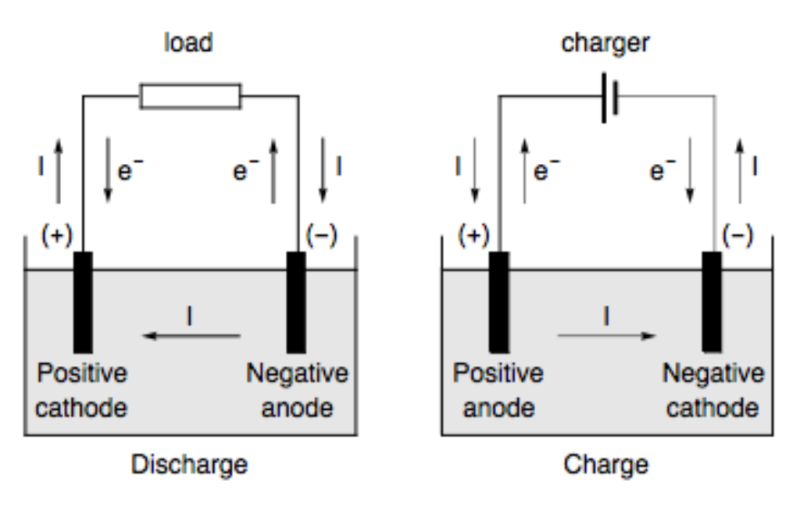
Preview Image: Electron Movement During Battery Recycling