It’s a no-brainer really, when we think things through carefully in terms of cause and effect. We should stop looking at the ‘brick wall’ that lithium-ion batteries are difficult to take apart. We should start thinking of redesigning batteries for recycling instead. Fortunately some scientists already are, and that’s great news for lithium-ion battery sustainability.
Redesigning Batteries For Lithium-Ion Sustainability
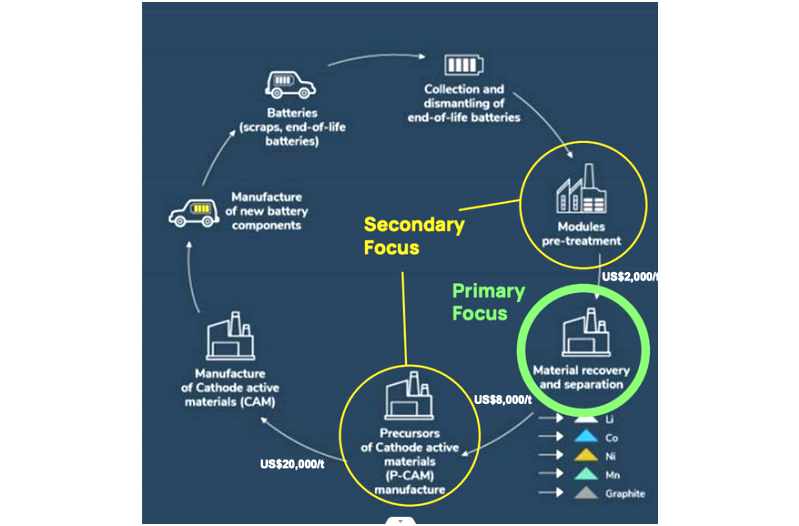
Rapid roll-out of battery electric vehicles, especially in Europe and China, is forcing us to reconsider lithium-ion sustainability. Although, according to Tumirador, better designs could almost halve the cost of recycling and recovering materials.
Scientists from Worcester Polytechnic Institute (WPI) and Massachusetts Institute of Technology (MIT) have put heads together. Their recommendations include:
- Redesigning lithium-ion batteries for easier disassembly. Scaling up direct recycling to preserve material functionality.
- Building partnerships across the ecosystem. Standardizing protocols to manage end-of-life batteries more effectively.
We move on to an MIT news announcement concerning their thoughts on redesigning batteries for recycling.
MIT’s Vision For Solid State Lithium Battery Recycling
MIT suggests that solid-state battery designers consider recycling when they choose their materials. Factors to consider include material prices, and suitability for low-cost, large scale manufacturing.
However, getting back to traditional lithium-ion batteries, we need to be mindful of the fact that their liquid electrolytes are volatile. Their bulky nature is another consideration. But both of these issues could be done away with, by changing over to solid state batteries.
The Engineer website speaks convincingly of the need to transform current practices, with alternative recycling technologies, and robotic disassembly. However, at the same time we need to consider the manufacturing process up front, so we have fewer rejects coming off the production line.
“The scope of materials recovered from spent lithium-ion batteries is broadening,” Yan Wang, from WIP told The Engineer. “While traditional methods focus on cathode materials, newer techniques are extending to anode materials, binders, electrolytes, and current collectors.”
More Information
Lithium Battery Recycling For The Environment
Recycling Battery Materials Japanese-Style