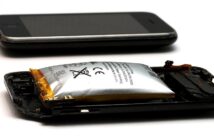
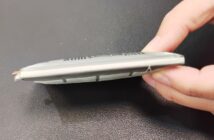
News out on the streets thanks to Evan Blass has it Samsung is ending its long standing love affair with lithium-ion. The relationship has had its stormy moments though. Do you remember the exploding Galaxy Note 7’s? However, it seems the underlying reason this time is cost, and faster charging. Could Evan Blass’s Samsung leak foreshadow an industry trend?
The Samsung Leak is in Line With Recent Research
Graphite, graphene and its nano-tubes have been in news lately as scientists search for next gen batteries. Graphene has shone through as the rising star with a charging speed up to five times faster. The only question in our minds is why Samsung took so long.
Evan Blass believes at least one Samsung graphene battery phone will go live by 2021 latest according to his Samsung leak. This could recharge in thirty minutes per Tech Radar. However, their esteemed source of hitherto unknown facts believes there are still details to tidy up. These could include lowering cost while increasing capacity which could be a tough challenge.
The Evan Blass Leak Opens a Broader Debate
If Samsung has indeed cracked the code with graphene batteries, then others will surely follow. After all, who would purchase a more expensive phone that took five times longer to charge? Where to with the electric-car industry’s affair with lithium-ion, with the marked exception of the Nissan Leaf?

There’s always something new in the world of batteries. Much research has recently gone into enhancing lithium-ion technology. The classic product cycle rotates through development, launch, growth, maturity to decline. Electric cars had a short existence in the late 19th century but there has been a recent resurgence.
We can’t predict the outcome of what may become a disruptive electric battery war. However Evan Blass’s Samsung leak has certainly rippled the surface of the pond.
Related
Graphene Opens Doors to Alternative Energy
Samsung Finds That Graphene Can Charge Up to Five Times Faster
Preview Image: Graphene Atomic-Scale Hexagonal Lattice