Methane is a naturally occurring gas arising from the disintegration of organic matter, including when certain herbivores digest it. Much of it is sequestrated below ground, and in the ocean. The gas is also present in the atmosphere. The more of it there is, the warmer the temperature and vice versa. Hence, when there is a methane pulse from the South Sudan wetlands in Central Africa, we need to know more.
Atmospheric Methane Pulse from South Sudan Wetlands
Atmospheric methane increased significantly from 2010 to 2016. Researchers at Edinburgh University in Scotland have traced a third of this coming from the South Sudan wetlands. They know these wetlands received a large inflow from the East African lakes during those years.
This would have boosted plant growth, and introduced additional, rotting vegetative material. According to Science Daily, wetlands are the largest natural source of methane in our atmosphere. We therefore need to monitor this situation carefully, because the gas has a much bigger impact on global warming than carbon dioxide.
Can We Link the Lake Flow to Climate Change?
There have been numerous studies into the sensitivity of the East African lakes to climate change. Lydia Atieno Olaka published a paper named ‘Hydrology Across Scales Sensitivity of East African Lakes to Climate Changes’.
She says the effect depends on the shape and length of the takes, and proximity to the escarpment. None the less, she believes the strength of variability of the effect depends on the onset, timing and intensity of moisture-laden winds. Climate change could therefore have caused the unusual inflows into the South Sudan wetlands. And this may have caused the uptick in global warming.
We must be careful not to tamper with nature’s systems. They are in gentle balance, but we do not know how far from their tipping point.
Related
Why We Owe Our Life to CO2 and Methane
Methane-Emitting Truth about Natural Gas
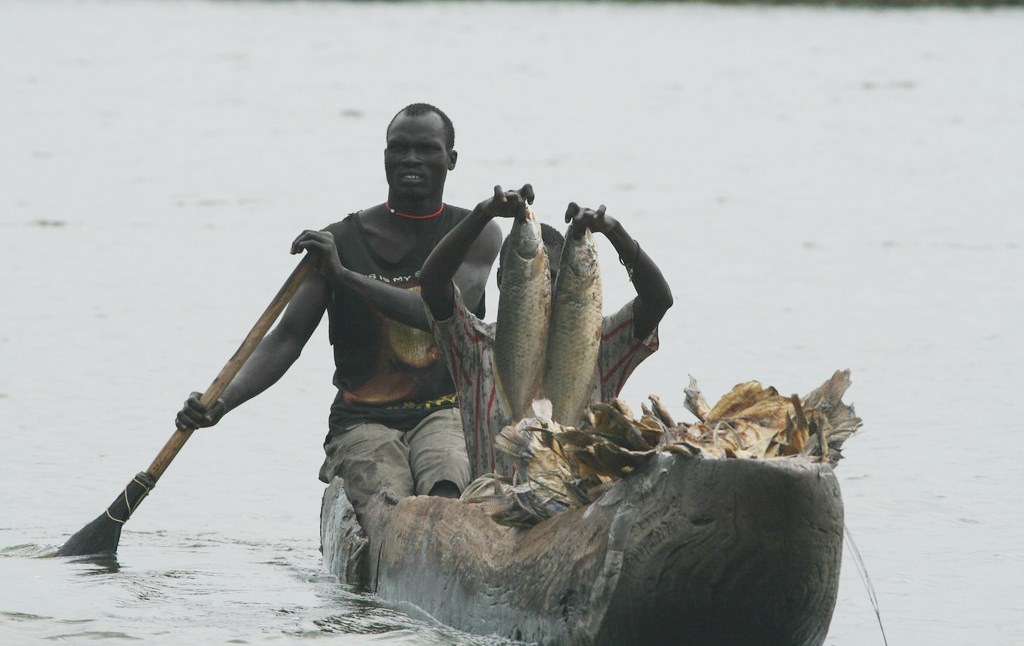
Preview Image: Fishing in South Sudan Sudd Wetlands
Video Share Link: https://youtu.be/96QOyr4mrLE