Astronomers believe Earth is the only planet sheltering life, owing to us having free-flowing water. Because the outer planets furthest from the sun have water trapped as ice. While on those closest to the sun any water would boil away. Furthermore, greenhouse gases in Earth’s atmosphere – including carbon dioxide – maintain a constant temperature by regulating solar radiation penetration.
Carbon Dioxide and the Goldilocks Principle
Scientists call this narrow zone of happiness after the story of a little girl and three bears. Childhood memories come flooding back. Do you recall how she preferred her porridge neither too hot, nor too cold but just right?
Earth’s temperature is in a range of ‘just right’ owing to non-condensing atmospheric gases that volcanoes and human activity caused. The bind is, we evolved to live in this narrow band of happiness too. The non-condensing gases include carbon dioxide, chlorofluorocarbons, methane, nitrous oxide, and ozone.
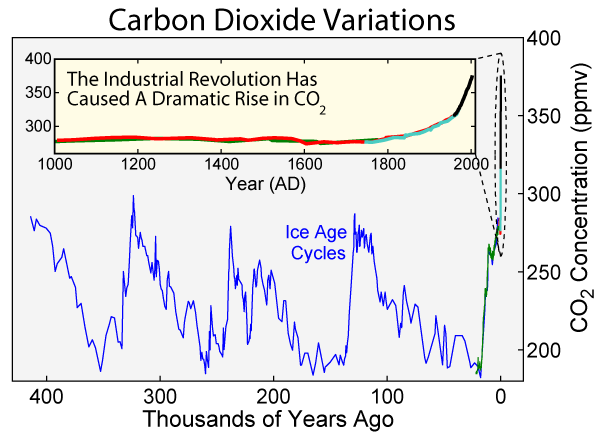
However, were these greenhouses gases to dissipate, atmospheric moisture would fall to the ground. We would enter an ice age for an undefined period. Geologists have found a historic correlation between glacial periods and carbon dioxide levels. These swung between 180 parts per million when glaciers blanketed Earth, and 100 more in warmer times.
How We Are in Uncharted Territory Now
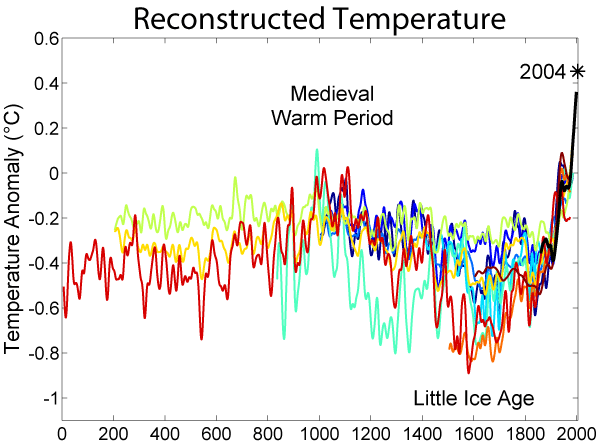
“When carbon dioxide increases, more water vapor returns to the atmosphere,” explains David Rind of Goddard Institute for Space Studies. “This is what helped to melt the glaciers that once covered New York City.”
“The bottom line is that atmospheric carbon dioxide acts as thermostat in regulating Earth’s temperature,” adds his colleague Andrew Lacis. “Today we are in uncharted territory. Carbon dioxide is approaching 390 parts per million in what has been referred to as the super-interglacial period.”
Industrial activity is clearly contributing to the rapidly increasing levels of atmospheric carbon dioxide and other greenhouse gases. Renewable energy storage hopes to stem the tide, and eventually turn it the other way.
Related
Why 350 Is The Most Important Number Right Now
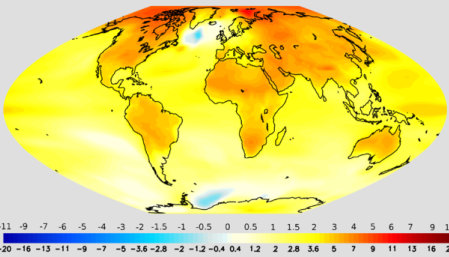
Preview Image: Temperature Projections: Late 20th to Mid 21st Century