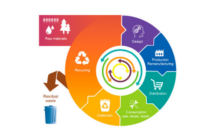
A circular economy involves reusing scarce resources over and over again, so we theoretically never exhaust the supply. This is why we should prefer wind, solar, and tidal energy over burning coal, oil and and natural gas. Electric vehicles running on renewable energy in their batteries are part of the solution. But spending natural water on these batteries ought not to be, surely?
Depriving the Atacama of Natural Water for Batteries
The lithium mineral is an essential component in electric vehicle batteries. Lithium-ion chemistry uses sub-microscopic lithium ions to store energy, and release it. Lithium is a scarce resource. We therefore ought to use it wisely, in the spirit of the circular economy.
We were taken aback by an article in the BBC on July 20, 2025, that questions taking water from Chile’s Atacama salt flats. This natural depression surrounded by mountains is also the world’s largest, and purest source of lithium mining for electric vehicle batteries.
Mining companies at Atacama extract the lithium by pumping salty brine water containing the mineral out of the ground. They collect this water in shallow ponds so it can evaporate, leaving a rich lithium residue behind. However, the water does not recycle back into the ground. Instead, it evaporates into the air.
The BBC article that we link to below, questions the wisdom of spending natural water on batteries in this way. Farmers living on the flats report their groundwater springs are drying up, the grass in gone, and wildlife is vanishing. “Without water, without agriculture, what are we going to live on,” one farmer asks?
Recovering Lithium from Geothermal Brine Instead
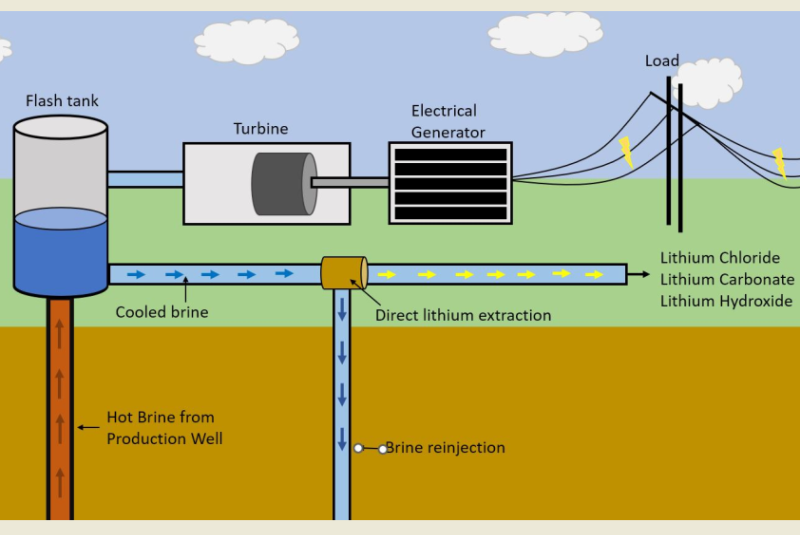
Geothermal brine is a hot, highly saline solution. It exists deep underground in geologically hot areas. Scientists at University of Connecticut are investigating recovering lithium from this source, instead of spending natural water on batteries.
The Connecticut report that we link to below, explores a geothermal idea that has been around for a while. However, in this instance they are probing ways to do the job more sustainably, and in North America too.
This is an important task, given a third of North America’s greenhouse gases currently come from its transport sector. Some projections suggest a ten-fold increase in the global electric vehicle market by 2030, with demand for lithium skyrocketing.
More Information
Atacama Desert Flamingos Under Threat
Chile’s Tumultuous Lithium Ion Reserve
Preview Image: Atacama Salt Flats in Chile
The Rise of Green Tech Is Feeding Another Environmental Crisis