Storing heat with climate batteries underground, is a simple way of saving energy from the sun for consumption later. However, this technology is not the same as the chemical reactions inside lithium-ion or lead-acid batteries …
You see, with climate batteries we preserve air warmed by the sun underground, and retrieve the warmth later when we need it. A simple idea like this can be a great way to benefit from natural renewable energy.
Storing Solar Heat in Climate Batteries
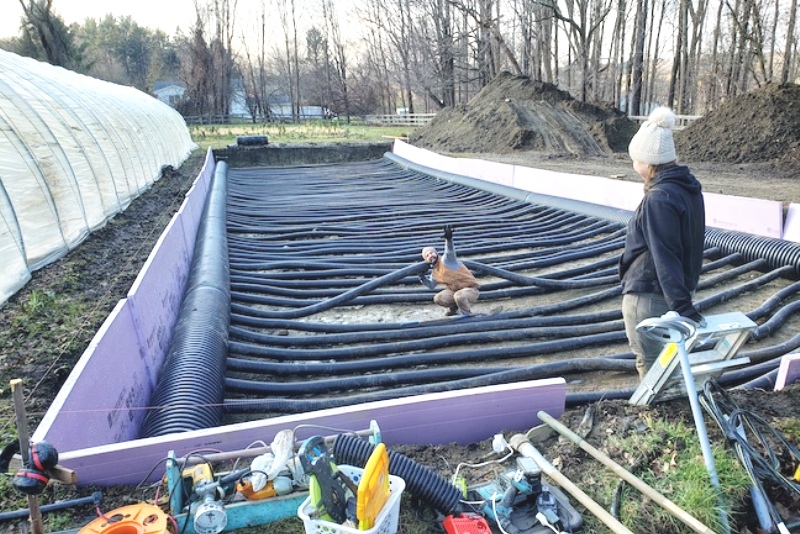
We often encounter these climate batteries in agriculture, especially in greenhouses. During the day, the sun warms the air inside the greenhouse. Fans push this warm air through pipes buried under the soil. The soil absorbs and stores the heat, keeping the pipes warm.
At night, when temperatures drop, the stored warmth slowly moves back into the greenhouse through the pipes. This helps keep the plants warm without using much electricity. All we need is a pump to circulate the air.
How This Works in Practice
The underground pipes are usually plastic tubing, because this material is thermally responsive. The soil acts as a ‘battery’, because it can hold heat for many hours.
Saving Energy and Money With Climate Batteries
Storing warmth in climate batteries can reduce heating costs at night, and lower carbon emissions. They are especially useful in areas with sunny days and cool nights.
Many gardeners and small farmers favor them, because they use renewable solar energy instead of gas or coal-based heating.
However, climate batteries do also have their limits. They work best in well-designed greenhouses with good insulation.
Installation can be expensive, because pipes and fans must be buried underground. The system also depends on sunlight, so performance may drop during long cloudy periods.
Storing heat with climate batteries is becoming more popular, as we search for cleaner and cheaper ways to control temperature. They also show how simple ideas, such as storing warmth underground, can help reduce energy use and make farming more sustainable.
More Information
The Greenhouse Effect in Nature’s Garden