

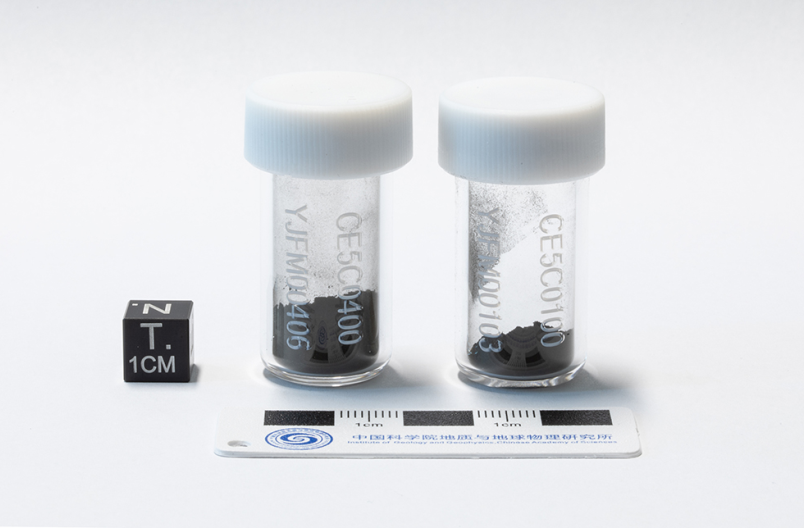
Graphene is a modified form of natural graphite, that has exceptionally high tensile strength, but is costly to produce. This ‘wonder material’ is also the thinnest two-dimensional substance in the world. Graphene’s high surface area and unusually high conductivity has produced remarkable prototype batteries. A Chinese moon lander sent graphene samples back to Earth, revealing a possible future of batteries on the Moon.
The Future IS NOT Mining Minerals in Space
We are not suggesting for a moment that we should open a graphene mine on the Moon, on the basis of the Chang’e-5 lander’s discovery. Earth’s closest cousin is in pristine condition, and we should not disturb it. However, it is none the less interesting to find the ‘wonder battery material’ on the surface up there.
Scientists surmise that graphene formed naturally on the Moon, during a time of high temperature and pressure. We have the skills to replicate these conditions on Earth, in our laboratories. Could we find a way to fabricate graphene commercially?
Imagine, just imagine, the Actuemoteur website suggests, having a lighter, smaller EV battery with an extended driving range. Is this the stuff of fantasies, do you think? Or did the Chinese spacecraft discover the future of batteries on the Moon, that could have lithium-ion back pedaling?
Will the Future of Batteries be That Simple?
We stopped by The Graphene Council website, for a second opinion. They took the news seriously, on the basis of the research report that we link to below. After all, they have been studying graphene since 2010, when a sheet of carbon one-atom-thick astounded the world.
The discovery of graphene flakes on the Moon, ranging from two to seven layers thick, supports the theory of the ‘Giant Impact’ they say. This was when a Mars-size planet allegedly collided with Earth, generating the Moon in an immense explosion of heat.
The research report closes with this thought. “Understanding the process of natural graphene formation, helps us understand how we can do it on Earth.”
More Information
Graphene Slurry for Coating Battery Electrodes
Graphene Cathodes Enhance Conductivity
Preview Image: Soil Samples From Lander


