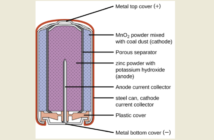
Everything here on Earth is one or other kind of matter. All matter comprises atoms, or groups of atoms we call molecules. Some of these atoms or molecules carry net electrical charges that we call ions. This makes them useful in batteries. This introduces us to the slight matter of battery density, which determines how much work a particular battery can do.
Denser Storage in Devices We Call Batteries
Battery density is a measure of how much energy a battery can store, and deliver. This volume relates directly to the movement and storage of ions, and how many of these there are. Some materials, notably lithium, have a larger proportion of ions, and this makes them more powerful.
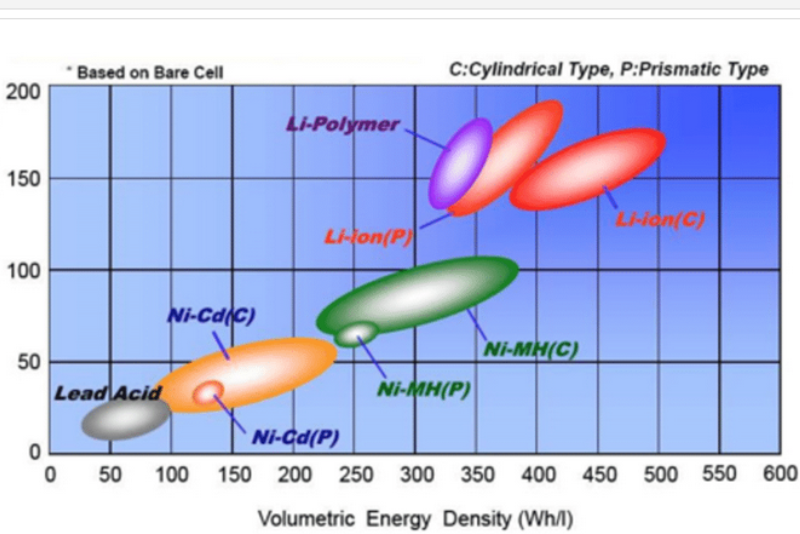
Battery scientists compare the slight matter of battery density, using two standard measures. These standards are watt-hours per weight, and watt-hours per volume of space a battery occupies.
A watt-hour is a measure of the amount of energy produced or consumed, by one watt over one hour. We often see battery density expressed in smaller milliwatts, and larger kilowatts, depending on the application. But how does battery density affect us in practice?
Density Matters More Than Slightly in Batteries
We have established that battery density refers to the amount of work a battery can do. This depends on the number of microscopic ions it contains, in the particular materials that make up its internal chemistry.
A battery with lower energy density would be heavier / bulkier than one with higher density. Lithium metal contains an unusually-high accumulation of ions. This single factor is responsible for the popularity of lithium-ion batteries.
Lithium-ion batteries are popular in portable devices, and electric vehicles because they are lightweight and thin, yet provide the energy their user requires. Practical constraints prevent the development of more powerful batteries, because of the space they would occupy. This limits EV driving range, and phone talk time too.
This conflict between battery size and weight and energy capacity, is preventing mass roll-out of electric airplanes and container ships. Someday we imagine extremely dense batteries, that would make these things possible. Until then, we shall ponder over ‘the slight matter’ of battery density.
More Information
Battery Density Facts, and Considerations