Batteries, or portable powerhouses as we sometimes call them, stand in the way of progress. We want to use them in wearable devices, yet their clunky, three-dimensional shapes hold us back. Sure, we publish exciting research into flexible, nano-thin batteries but are these commercially possible. Have we been looking past the obvious. What about the virtual batteries in our bodies?
The Case For the Virtual Batteries in Our Bodies

Our bodies run on energy driving signals between cells, and powering muscles to perform tasks.
Writing in Extreme Mech, Sebastian Anthony estimates we produce 100 watts of energy even when we are at rest in bed.
This force keeps our hearts pumping, our lungs breathing and our digestive system working even while we are fast asleep.

This 100 watts of power, consumed throughout the day equates to 2,000 calories of food, our recommended intake. Trained athletes can pump out up to 350 watts in short bursts of extreme effort. We are little powerhouses. But are we generators, or batteries?
Generators do not store power they only make it. Batteries do both, so there is a strong argument the virtual batteries in our bodies exist. How else could shipwrecked sailors survive for weeks with hardly any food? Now, if we could only find a way to harness that energy to charge our phones, that would be something to write about.
Future Thoughts About Tapping Into This Energy
We shed a lot of body energy when we exercise hard. Our bodies repel it as perspiration in an autonomous HVAC system. Stockholm Railway Station captures commuter body heat to warm water for an office building. There have been successful efforts to capture the kinetic energy from walking. Harnessing the virtual batteries in our bodies is coming. It is no longer a question of if, but when.
Related:
Different Types of Energy We Measure
The Difference Between Energy and Power
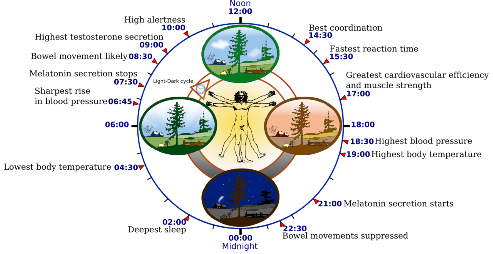
Preview Image: Human Biological Clock