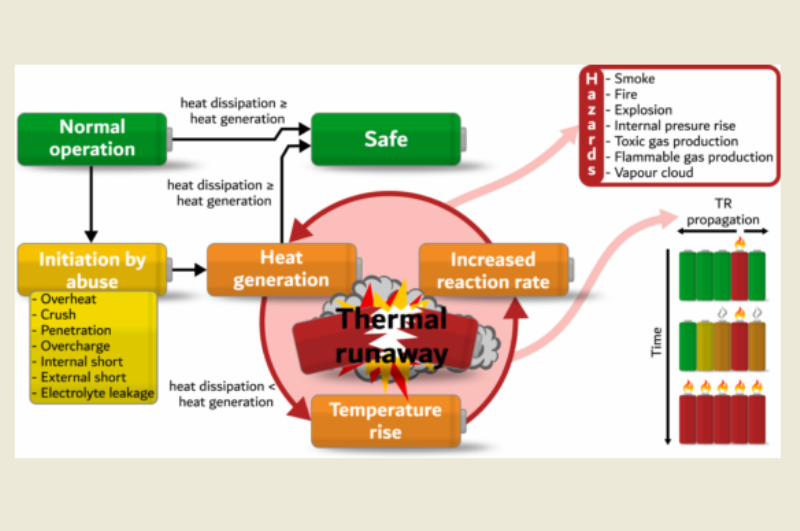
We spent our last two posts explaining the phenomenon of lithium-ion batteries overheating, and entering thermal runaway. We shared how difficult it is to get on top of these situations, and why this is so. Losing a laptop or a phone in a battery fire is not the end of the world. We close this short series by considering the more important matter of thermal runaway and personal safety.
Thermal Runaway, Reality and Personal Safety Risks
The possibility of experiencing a lithium battery fire personally is minimal, although it increases slightly in terms of these two factors:
- The number of lithium-ion cells present where we are.
- The proportion of those that are damaged or low quality.
Thus in terms of this, an electric car battery is statistically more likely to give trouble than a single button battery, according to Gasmet Technology. As is a AAA-size cell that traveled a distance in the compactor on a garbage truck.
Two Ways to Protect Ourselves Against the Risk
Safety is as much in our hands as it is in the arms of fate. Traffic accidents happen, but we reduce the risk by driving thoughtfully. The COVID pandemic was all around us a couple of years ago, but most of us came through by taking sensible precautions.
Managing lithium-ion battery thermal runaway and personal safety risks boil down to purchasing quality products, and using them wisely. This should further reduce the statistically-minor chance of them short-circuiting, and releasing heat.
Lithium-ion battery fires are not something to take lightly, because they can spread and be difficult to extinguish. They are also extremely hot and toxic, and can harm us if we do something reckless.
The same thing could be said for many of the other products we come across, and use in our daily lives. We wrote this short series to help you own and use lithium-ion batteries safely. Remember these tips when you purchase any new battery. Learn to spot the imitations and ignore the rogue traders.
More Information
Thermal Runaway in Lithium-Ion Batteries