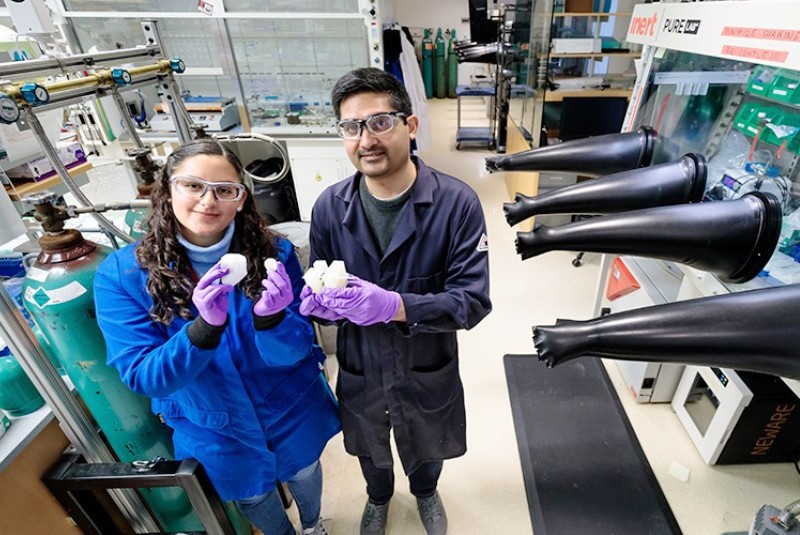
The Center for Organic Battery Innovation forms part of the University of Chicago’s Institute for Climate and Sustainable Growth. Scientists there have decided it is time to build safer, cleaner, and greener batteries. Their thrust towards more sustainable batteries translates to finding a replacement for lithium chemistry.
Why Do We Need More Sustainable Batteries Now?
Batteries have become essential if we want to electrify our global economy. Lithium batteries are making a great contribution, but this comes at a long-term cost to our economy:
- Lithium battery makers use rare and expensive metals.
- There is no cost-effective way to recycle these materials.
- Lithium metal is unstable, and prone to overheating and fires.
University of Chicago’s Center for Organic Battery Innovation published a media release on February 25, 2026, that we link to below. This report confirms that the Center is pursuing a ‘fundamentally different approach’.
They want to develop batteries built from earth-abundant organic materials, rather than scarce metals like lithium, cobalt, and nickel. This approach involves using carbon, hydrogen, and oxygen instead.
Three Converging Trends Support This Thrust
The Center for Organic Battery Innovation’s thrust towards more sustainable batteries, promotes elements that are already freely in air, in water, and in every living thing. Three favorable conditions are converging to make this approach practical:
- Global battery demand will increase 14-fold by 2030, yet critical materials concentrate in a few countries.
- Organic chemistry and artificial intelligence permit trialing alternatives at a far quicker pace.
- Significant capital is becoming available to fund new energy solutions for global warming.
These factors support the thrust towards more sustainable batteries. The Center for Organic Battery Innovation is gathering an impressive team of scientists, engineers, and battery strategists.
“We’re combining AI-driven discovery with world-class facilities,” a senior team member explains. “To compress the timeline to move breakthroughs from laboratory to production.”
More Information
Towards Sustainable High Capacity Batteries
Organic Batteries For Our Sustainable Future