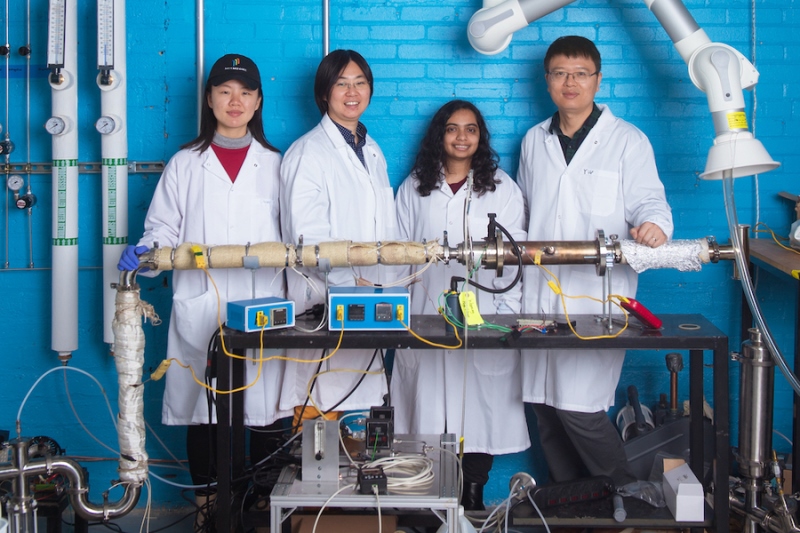
Researchers at Massachusetts Institute of Technology (MIT) were discussing how renewable energy replaces oil, coal, and natural gas combustion. Their assistant professor wondered whether those high-temperature chemical reactions perhaps had a role in building better batteries. Then the researchers found a way of using combustion to form cathode materials that we found intriguing.
Combustion Forces Enabling Better Cathodes
Burning fossil fuels consumes oxygen, and releases light and high heat. The MIT team wondered whether they could use this combustion to create materials for the energy transition. So they followed this line of thought of using these forces to create critical battery materials, instead of polluting soot.
Almost needless to say they turned their attention to lithium-ion batteries. That’s because demand for these products is skyrocketing, including for renewable energy applications. This particular MIT Team were not materials scientists, so they applied their minds to making them cheaper instead.
Using combustion to form cathode materials this way may seem obvious in hindsight, although the team actually achieved a breakthrough. They first began by examining the current technology for forming lithium-ion battery cathodes. We’ll pause for breather for a moment, because we find their lateral thinking so exciting.
Current and MIT Method For Forming Lithium-Ion Cathodes
The Current Method to Produce Lithium-Ion Cathodes
The lithium-ion battery industry traditionally uses salts from several metals, including lithium which provides the ions. Manufacturing equipment turns these salts into tiny particles, each of which contains a mixture of all of them arranged in a specific crystalline structure. The two-stage process for achieving this typically takes 23 hours, and is as follows:
STAGE ONE
- First, dissolve the metal salts (excluding the lithium) in water.
- Mix these in a chemical reactor. Adjust the pH with chemicals.
- Produce particles of the combined salts. Then dry and grind them.
STAGE TWO
- Grind solid lithium with the particles until the ions penetrate the mix.
- Heat the result to mix it, and achieve the desired crystalline structure.
- Complete the process by separating any particles that have joined.
Using Combustion to Form Lithium-Ion Cathodes
The MIT method is elegantly simpler, faster and cheaper. The team first mixes all the salts – including lithium – with water. Then it sprays this mix into a combustion chamber. A flame of burning methane gas heats the mixture and evaporates the water. The materials then decompose, oxidize, and solidify to form the powder product, after separating any particles.
More Information
Stabilizing High-Nickel Cathodes For L-Ion
New Conductor for Solid-State Lithium-Ion