All-solid-state lithium-ion batteries have great potential. They have impressive energy storage density, and can’t catch fire if they overheat. However, they have one long-standing disadvantage that has held back science until now. This catch has been their low lithium-ion conductivity. But now Japanese scientists appear to have ‘cracked the code’ with a new conductor for solid-state lithium batteries.
Significance of New Conductor for Solid-State Lithium-Ions
All-solid-state lithium-ion batteries with high conductivity could be a great step forward for safer renewable energy. However, as mentioned, scientists have been held back by their lower conductivity at the electrode-solid-electrolyte interface.
Sulfide-based electrolytes might have solved this drawback but for one thing. You see, they may be conductive, but they react with water and form toxic hydrogen disulfide. Three Japanese scientists knew there had to be a better way.
And so Professor Kenjiro Fujimoto, Professor Akihisa Aimi from Tokyo University of Science, and Dr. Shuhei Yoshida from Denso Corporation shared ideas and came up with a novel solution. They discovered a highly conductive lithium-ion electrolyte in the form of a pyrochlore-type oxyfluoride.
Is This a Dream-Come-True for Many Battery Researchers?
Prof Fujimoto certainly seemed to think this was the case when he spoke to Chem Europe on April 3, 2024. “Making all-solid-state lithium-ion secondary batteries has been a long-held dream of many battery researchers”, he explained.
“We have discovered an oxide solid electrolyte that is a key component of all-solid-state lithium-ion batteries, which has both high energy density and safety. In addition to being stable in air, the material exhibits higher ionic conductivity than previously reported oxide solid electrolytes.”
The commentary in Chem Europe (see link below) applauds this discovery because ‘it is stable and will not ignite if damaged’. This is certainly a fertile area for further research, it believes, especially in airplanes where high capacity and safety are paramount.
More Information
Solid State Could Side-Step Lithium-Ion
Solid State EV Battery Race Accelerating
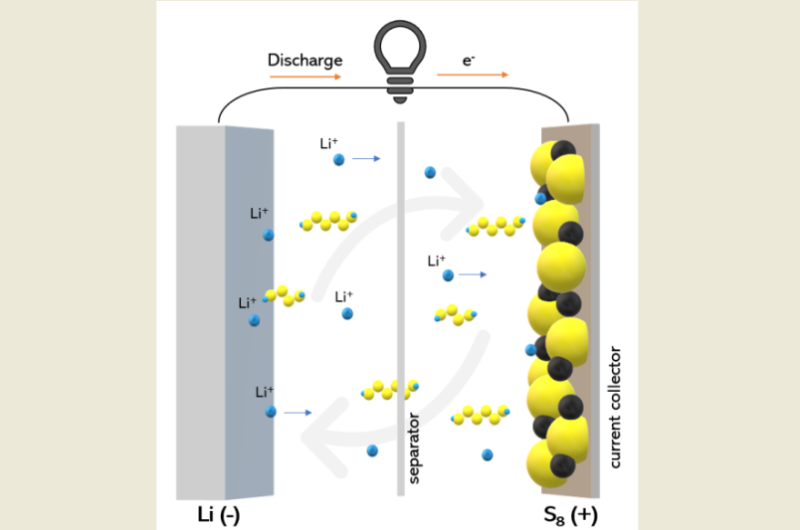
Preview Image: Ion Transfer in Battery