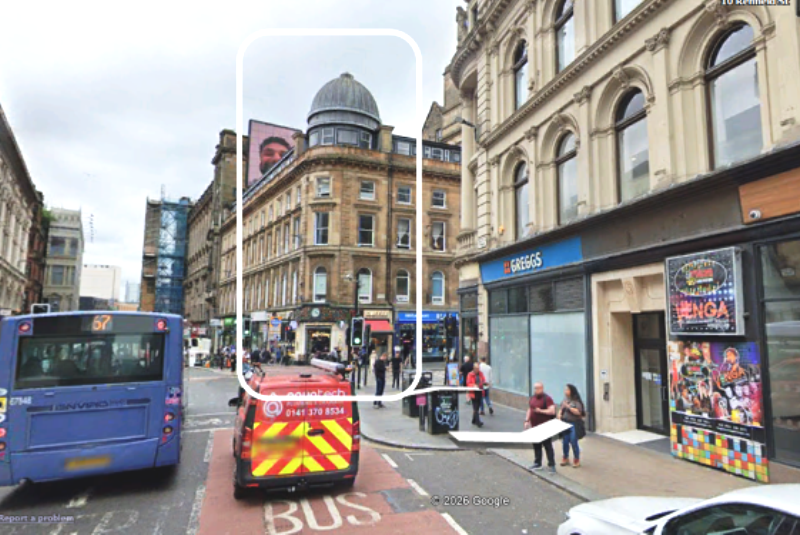
Firefighters faced a real challenge, as they worked to extinguish a fire in Glasgow, Scotland on March 9, 2026. It began in a listed building adjacent to Glasgow Central Railway Station. If a vape fire closes Glasgow Station that easily, then perhaps the authorities ought not to allow the business to return.
Massive Disruption from Vape Battery Fire
The BBC reports that the fire began in a vape shop in a building adjacent to the railway station. The upper part of the building collapsed after several hours. Management canceled all train services in the above-ground level, and it remained closed the following day.
Fortunately there were no casualties, although large crowds ignored the police advisory to stay away. At the time of writing, the Network Rail operator did not report any serious damage to the train station, although they would have to confirm this later.
Six fire crews initially attended the incident, although eventually there were over 60 firefighters and 15 vehicles fighting the blaze. What began as smoke billowing out of a building, became a blaze some described as ‘catastrophic’.
Vape Fire Closed More Than a Station Temporarily
Sadly, the vape fire that closed Glasgow Station temporarily, destroyed a number of small businesses too. The victims included a coffee shop, the owners told BBC was destroyed. A hair salon suffered a similar fate. Even the Grand Central Hotel had to vacate.
But that’s not even mentioning the huge numbers of commuters who were unable to work. Although some may have managed to arrive and leave from other local train stations. We find it amazing that something as small as a lithium-ion battery in a vape, might have lead to a disaster on this scale.
More Information
Could a Vape Fire Kill You Perhaps
Preview Image: Screenshot from Google Earth