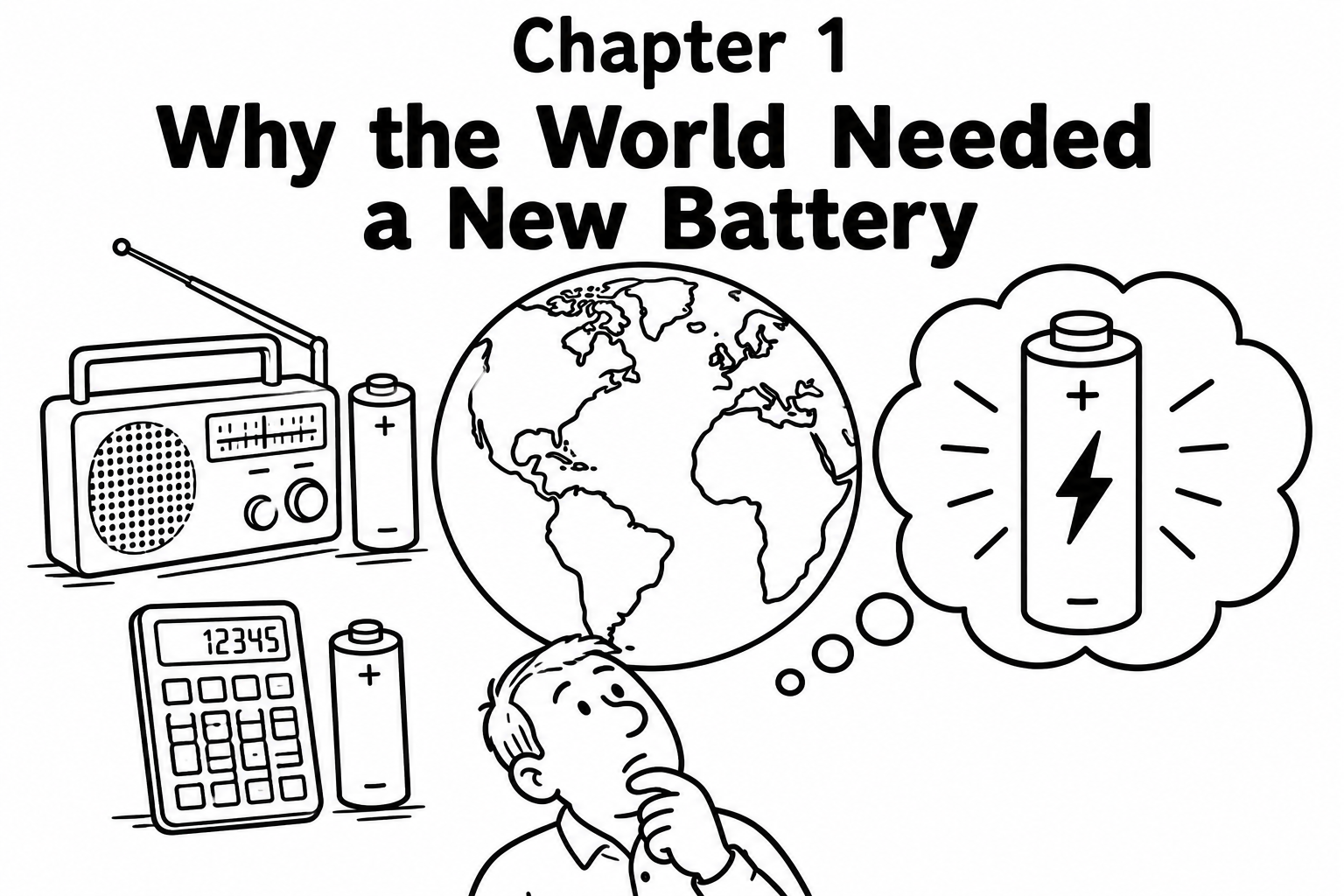
Most folk may not have known it, but we were waiting for lithium-ion batteries during the 1960’s and early 1970’s. We were becoming increasingly dependent on portable electrical devices. We needed smaller more powerful batteries.
A Taste For Mobility Triggers The Need For Lithium
Transistor radios, calculators and early cordless tools gave people a taste of mobility and convenience, but the batteries available at the time struggled to keep up. Lead-acid batteries were incredibly reliable but heavy, while nickel-cadmium batteries stored only modest amounts of energy and contained toxic cadmium.
An Oil Crisis Has People Waiting In Queues
The search for something better became more urgent, after the 1973 oil crisis had motorists in queues at filling stations. Fuel shortages reminded governments and companies that energy was a valuable resource.
Scientists may have known the world was waiting for lithium-ion batteries. Although they began looking not only for new fuels, but also for better ways to store electricity.
Lithium Raises Its Hand And Says What About Me?
One element attracted particular attention and that was lithium. It was the lightest metal on Earth, and could store and release large amounts of electrical energy. In theory, a lithium battery could be much lighter than existing battery designs, while storing far more energy.
However Lithium-Ions Were a ‘Two-Edged Sword’
Unfortunately, theory and practice were very different. Lithium metal is highly reactive. It reacts vigorously with water and can form tiny metal spikes, called dendrites, inside a battery during charging. These spikes can pierce the separator between the electrodes, causing a short circuit that may lead to fire.
Researchers therefore faced a difficult challenge. They needed a way to harness lithium’s remarkable energy without allowing the metal to become dangerous. Solving this puzzle would require years of careful research by scientists in different countries, each building upon the discoveries of others.
One Small Step At a Time Brought Us Closer
The breakthrough did not come from a single brilliant moment. It came through many small advances, each bringing the goal a little closer. The first major step was taken by an American chemist working for Exxon, during the turbulent years following the oil crisis.
More Information From Our Blog
Waiting For Lithium-Ion Batteries – The Challenge
Whittingham Opens The Lithium-Ion Battery Door
Goodenough Increases Volts in Lithium-Ion Batteries
Akira Yoshino Makes Lithium-Ion Batteries