If the entire Greenland ice sheet melted, the ocean level would rise seven meters. A study by Ben Strauss and colleagues at the University of Arizona found 180 US coastal cities at risk from rain melting this resource. “Approximately nine percent of the area in these coastal municipalities lies at, or below one meter,” they say.
“This figure rises to 36 percent when considering area at or below six meters.” These figures do not include the possibility of rain melting the entire Greenland ice sheet. Were this to happen, the sea would consume large parts of Jakarta, Bangkok, Lagos, Manila, Dhaka, Shanghai, London, and Houston.
Increased Rate of Winter Rain Melting Greenland Ice
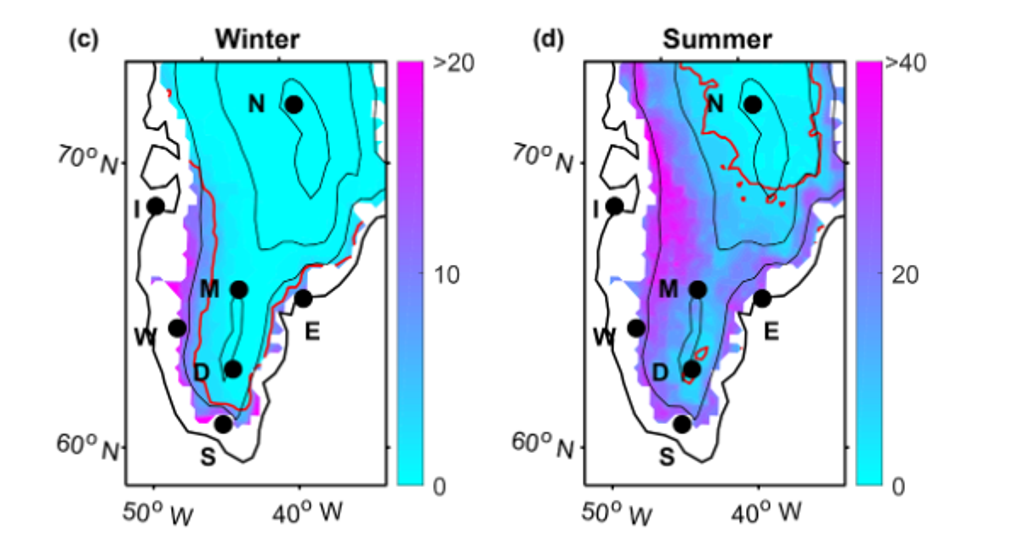
Precipitation usually falls as snow during a Greenland winter. This replenishes summer ice melt. Scientists have detected rain falling there in winter now. This is warmer than freezing and reduces ice thickness. Research in The Cryosphere journal reveals rainfall triggered ice melt 300 times between 1979 and 2012.
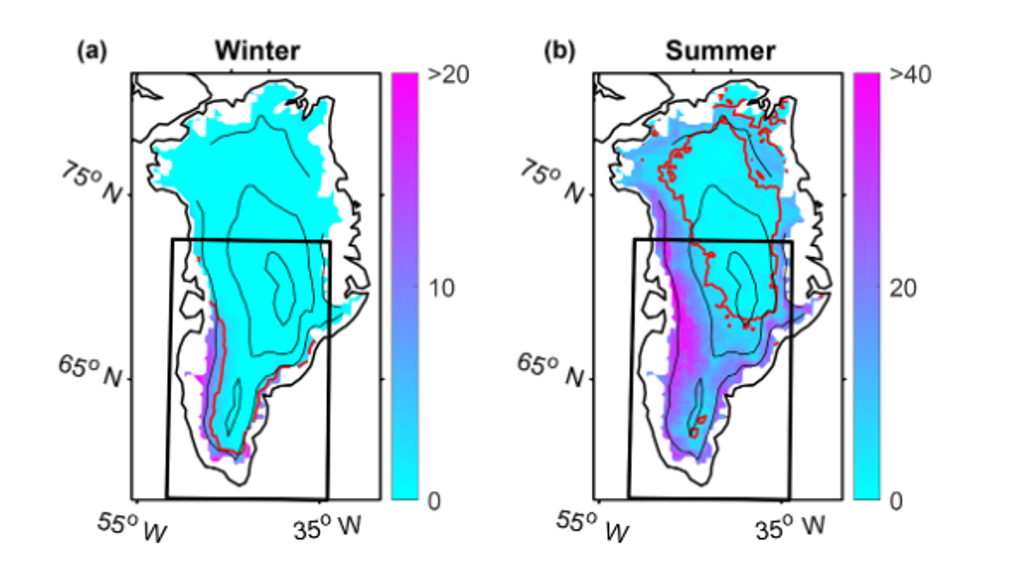
There were twelve such events each year by 2012, compared to two at the start of the study. Most of these were in summer. However, “a growing number happened in winter months,” science editor David Shukman reports. This was when the permanent dark of the polar winter would be expected to keep temperatures well below freezing.”
Why Is This Phenomenon Happening Now?
The entire Arctic region is warming twice as fast as the rest of Earth, according to NASA. This is affecting the behavior of the Jet Stream, with knock-on effects in Europe.
Glaciologist Jason Box says rain water has a ‘high heat effect’. This is because “it takes only 14mm of rain to melt 15cm of snow. Even if that snow is at a temperature of minus 15C” you get rain melting. “There’s a simple threshold, the melting point, and when the temperature goes above that you get rain instead of snow,” he says.
“So, in a warming climate it’s not rocket science that you’re going to have more rain than snow.”
Related
Total Greenland Ice Sheet Melt: A Preview
The Climate Crisis You Don’t Know About Yet
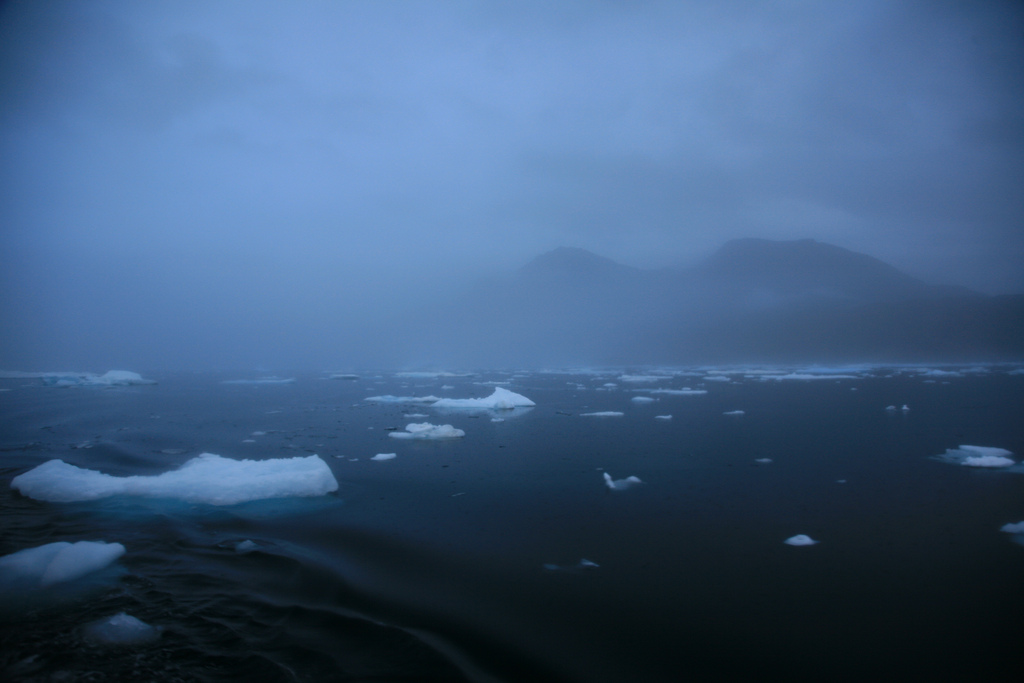
Preview Image: Cloud, Sea Fog, Rain, and Ice in Greenland’s Ammassalik Fjord