Scientists claim a major new success at Wuhan University of Technology, China. They describe their lithium-ion battery breakthrough in highly technical terms that leave us gasping for air. None-the-less we’ll do our best to explain, and leave a link to their report at the bottom of the page. If the Wuhan team is correct, then we have a “new kind of low-fluoride lithium metal battery”.
Lithium-Ion Battery Breaks Through Energy Density Bottleneck.
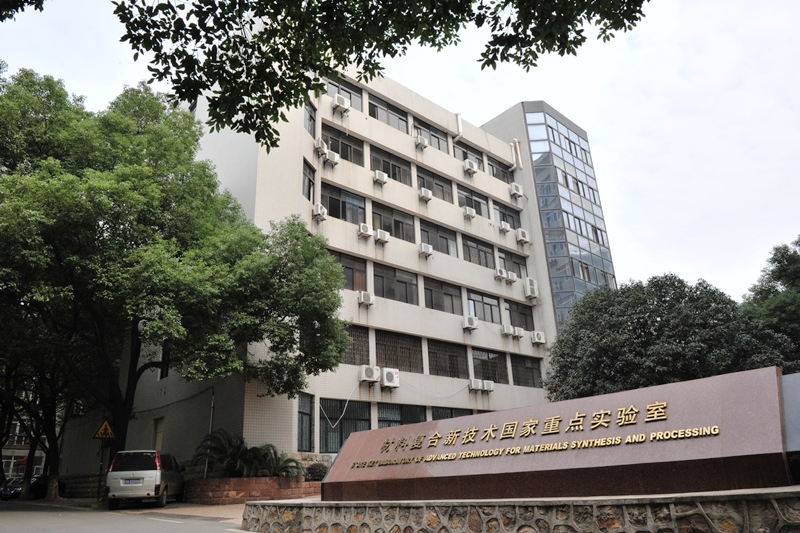
The Wuhan team conducted their research at State Key Laboratory of Advanced Technology for Materials Synthesis and Processing. This is at the International School of Materials Science and Engineering, Wuhan University of Technology.
They believe lithium metal anodes have potential “to break through the theoretical energy density bottleneck of commercial lithium-ion batteries”. However, the lithium metal expansion process currently destroys the solid-electrolyte interphase (SEI) layer. This results in “the growth of lithium dendrites and the formation of dead lithium”, they go on to say.
Their lithium-ion battery breakthrough came about after they developed new multilayer Fe3O4@Al(OH)3@ZnO (FAZ) nano-spheres using a hydrothermal method. Fe, O, Al, and Z are chemical symbols for iron, oxygen, aluminum, and zinc, so all are common materials too.
A New Kind of Low-Fluoride Lithium Metal Battery
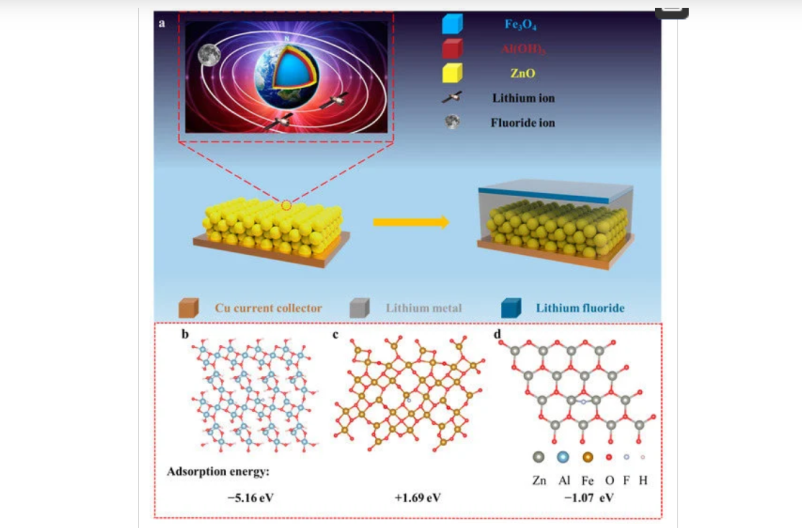
The Wuhan scientists identified low theoretical energy density, and high cost as the greatest challenges to lithium-ion technology. They chose to focus on the former, and now believe they have enough theoretical energy to break through the bottleneck. This was after they exploited the known potential of lithium-fluoride (LiF) to contribute to stable SEI layer formation.
They found a way to load Fe3O4@Al(OH)3@ZnO (FAZ) nano-spheres on the surface of copper foil, and inhibit the directional deposition of lithium ions.
- The inner layer of Fe3O4 assists the nano-spheres to load uniformly.
- The fluorine-rich middle Al(OH)3 layer absorbs easily into the electrolyte.
- The outer ZnO layer inhibits dendrite formation and promotes a healthy SEI.
The team claims their design “offers a new idea for the development of a new kind of low-fluoride lithium metal battery”. We shall watch this space with considerable interest.
More Information.
Sodium-Ion Electric Car Unwrapped
Barocaloric Effect in Thermal Batteries