Lithium-ion batteries are certainly hanging on as market leaders in our industry, although they do have their snags. This situation is likely to continue until someone comes up with equivalent energy storage density. Rechargeable zinc-batteries continue to be a possibility, as we explore here.
A Quick Update on Zinc-Based Batteries
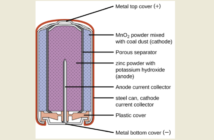
Rechargeable zinc batteries use zinc as their anode electrode, and store their energy in ions there when at rest. As they discharge, these ions travel across to their cathode electrodes, via their electrolyte. When we recharge them, we reinstate their anodes close to their previous state.
Zinc batteries vary their operating structures by using different cathode materials. However, all have an insulating porous separator between their electrodes, and an electrolyte through which their ions cycle. Batteries with zinc anodes usually also have water-based, non-flammable electrolytes.
Zinc chemistry still faces a number of challenges compared to lithium-ion, notwithstanding ongoing improvements to this basic model. Noteworthy drawbacks include limited cycle life due to dendrite formation at the solid electrolyte interface, and progressive cathode deterioration.
On the flip side though, zinc battery chemistry has several strengths that make it a contender. SciSpace lists high energy density among these, as well as the fact these batteries use abundant materials. If we could solve their dendrite formation and serial interface problems, then they could still be a winner.
Where Lies the Future of Zinc Battery Chemistry
AZO Materials sees several potential applications for rechargeable zinc battery chemistry, once these problems have been ironed out. For example, they visualize them in the automotive sector, with comparable density to lithium-ion. Zinc chemistry’s relatively low cost and high efficiency could also suit it for battery energy storage.
However, and here’s the catch, researchers will first have to resolve the issues we mentioned holding zinc-based batteries back. Therefore AZO Materials suggests opening a second string involving hybrid, and redox flow batteries as alternative possibilities.
More Information
Aqueous Zinc-Ion Battery Breakthrough