Every morning when your child boards the yellow bus for school, you often find yourself remembering your own school going experience. Not much has changed since. Despite the years in between, school buses remain the same – smoke spitting dragons.
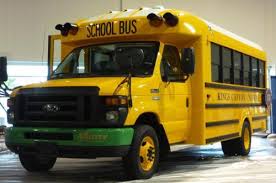 Electric School Bus
Image Courtesy: www.jsonline.com
Why Green School Buses
Diesel smoke fumes from buses can induce lung related illnesses like asthma and bronchitis, heart diseases and allergies. Schools can take care of this by replacing conventional diesel buses with modern energy efficient transport. This will cut on school’s expenses, which can be passed on to parents too. It will be a good practical example for students in energy and resource conservation.
Energy Efficient School Buses
There are many alternatives to diesel available for schools. These fuels may be broadly categorized into Biofuels (biodiesel, ethanol, and propane), natural gas (CNG/ LPG) and Electric vehicles (EV). Such options will decrease the petroleum consumption and reduce the carbon footprint as well. Here we will discuss the use of electric vehicles in schools.
Electric Vehicles
Vehicles that run on electricity are called electric vehicles. There are mainly three types of electric vehicles, depending on energy source used for powering them.
Hybrid Electric vehicles, or HEVs, run on a conventional internal combustion engine as well as the electric power generated from a battery. The battery used in HEVs is charged while it is running on diesel. So there is no need to plug it in for charging.
Plug-in Hybrid Electric Vehicles, or PHEVs, use the same technology as HEVs for running. But batteries in PHEVs need to be charged by plugging into an electric source.
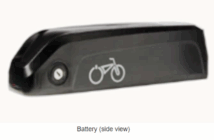
All Electric Vehicles, or EVs, have no fossil fuel component. The electrical energy stored in a battery is used to run the motor in EVs. An EV with a pack of 4 to 5 fully charged batteries can travel upto 100 miles in standard conditions. EVs are more expensive than conventional and hybrid vehicles.
EVs as School Buses
Electric vehicles are ideally suited to be used as school buses. School buses run on prescribed routes. So their battery requirements can be estimated quite accurately. This ensures installation of the right size of battery for each round trip. However, these buses stay idle for most of the day. During this time, they can discharge their battery to the grid, using the latest V2G (vehicle-to-grid) technology. The payment received for this service can offset the extra cost of EV. Actually after some time, it can turn profitable and pay for its own maintenance.
Going green with these new electric school buses makes better economic as well as environment sense. It will be a big leap towards protecting our children, caring for our environment and making the world a better place for all.
Related Posts:
Hybrid and Electric Vehicles’ Batteries
Avoiding Battery Failure in Your Electric Vehicle
Biofuels: Alternate Sources of Fuels for Vehicles