Wind Farms are huge tracts of lands having many wind turbines to produce electricity using wind energy. A typical wind farm may have hundreds of single turbines installed. Each turbine produces electricity independently.
Why Wind Farms
Using wind turbines to generate electricity is the most effective way of utilizing wind energy. Having a large number of wind turbines together makes wind power economically viable. Wind farms are set up in areas that have good wind speeds throughout the year. Sea shores and plains are geographically better suited for the wind farms. Having wind farms spread over varied geographical areas also ensures that the power grid doesn’t run short of wind power.
Onshore and Offshore Wind Farms
Wind blows because of uneven heating of air by the Sun. As air gets heated, it rises up. Cooler air from the surrounding area rushes to fill the space left empty by the rising hot air. This rush is what we call wind. Water gets heated slower than the land and cools down slowly as well. Due to this temperature difference, breeze always blows near large bodies of water like the sea, rivers and huge lakes.
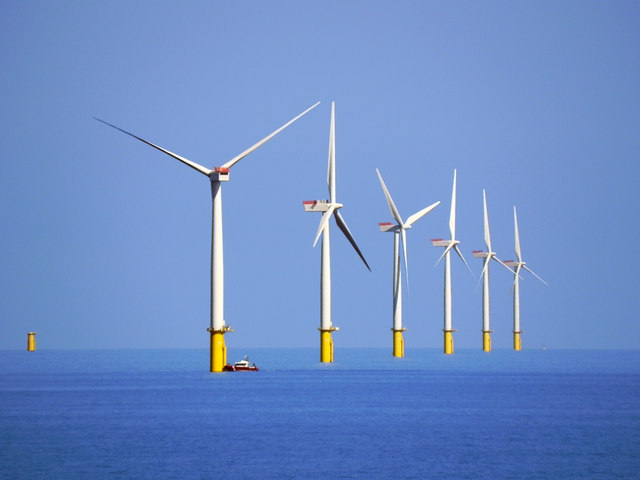
Photo Courtesy: en.wikipedia.org
So coasts are a good option to set up wind farms. Wind farms built on the shores are called onshore farms. Wind farms set up in the water body itself are called offshore farms.
Limitations of Wind Farms
The biggest drawback of wind energy is that wind doesn’t always blow fast enough to generate power. Loud noise, death of birds and bats due to turbine blades are also some of the problems commonly associated with wind turbines. Wind farms develop a microclimate of their own due to the wind turbulence they cause in their areas of operation. Wind farms have been found to be slightly cooler during the day and warmer during the night than the surrounding areas.
Countering the Limitations
One way to take care of low wind strength is to have a vast portfolio of wind turbines spread over varied geographical areas. As you have more and more wind turbines or wind farms, chances of all the turbines stopping at once decreases dramatically. As for avian deaths, this is a problem that wind farms share with fossil fuel plants as well. The fossil fuel plants affect the habitat of the birds and other living creatures by causing widespread water and air pollution. The effects of microclimate changes have not been substantiated by enough contemporary studies.
It’s on us to make a choice between environment degrading, non-renewable fossil fuel energy and clean, renewable wind energy.
Related Posts:
Wind Power: Sustainable Clean Source of Power